All-on-X Is Complex. How the Right Dental Lab Makes It More Predictable
An All-on-X case is complex by nature. Implant positions, bite, esthetics, provisional restorations, passive fit, and the final zirconia restoration all have to come together across multiple stages.
The challenge is not simply producing a beautiful full-arch restoration at the end.
It is making sure the decisions made weeks earlier still make sense when seat day arrives.
That is where the right All-on-X dental lab can make a meaningful difference.
At Dentlink, we approach full-arch cases backward from the final smile. Each major step is checked before the final zirconia is fabricated, while one master technician follows the case throughout the process.
The goal is simple:
Make a complex case more predictable.
Why All-on-X Cases Need More Than a Final Restoration
With a single crown, a laboratory is usually working with a relatively contained restorative problem.
A full-arch implant case involves far more variables.
The lab may need to account for:
- implant position and angulation
- restorative space
- bite and vertical dimension
- provisional design
- passive fit
- screw access
- esthetics and gingival characterization
- the relationship between surgical planning and the final prosthesis
That is why an experienced full-arch dental lab should not simply receive the records, fabricate the final prosthesis, and hope everything comes together at delivery.
The workflow needs checkpoints.
And just as importantly, the case needs clear ownership. At Dentlink, each restoration is matched with a master technician whose expertise fits that specific case. You can learn more about how this works in Dental Lab Partner: Who’s Behind Your Case?
The Question Should Not Be “Will It Fit?” on Seat Day
Imagine reaching the final appointment and only then discovering that something does not align as planned.
For an All-on-X case, seat day is too late to start asking basic fit questions.
That is why Dentlink’s All-on-X workflow works backward from that appointment.
Before the final restoration is made, the workflow asks:
Will it sit passively on every implant?
A resin or titanium verification jig is used to confirm implant positions, while a wax rim establishes the bite. The final zirconia is fabricated only after those records have been confirmed.
In other words:
Verify first. Fabricate second.
That extra checkpoint matters because the objective is not simply to make a restoration that looks right on a digital design.
It needs to translate to the mouth.
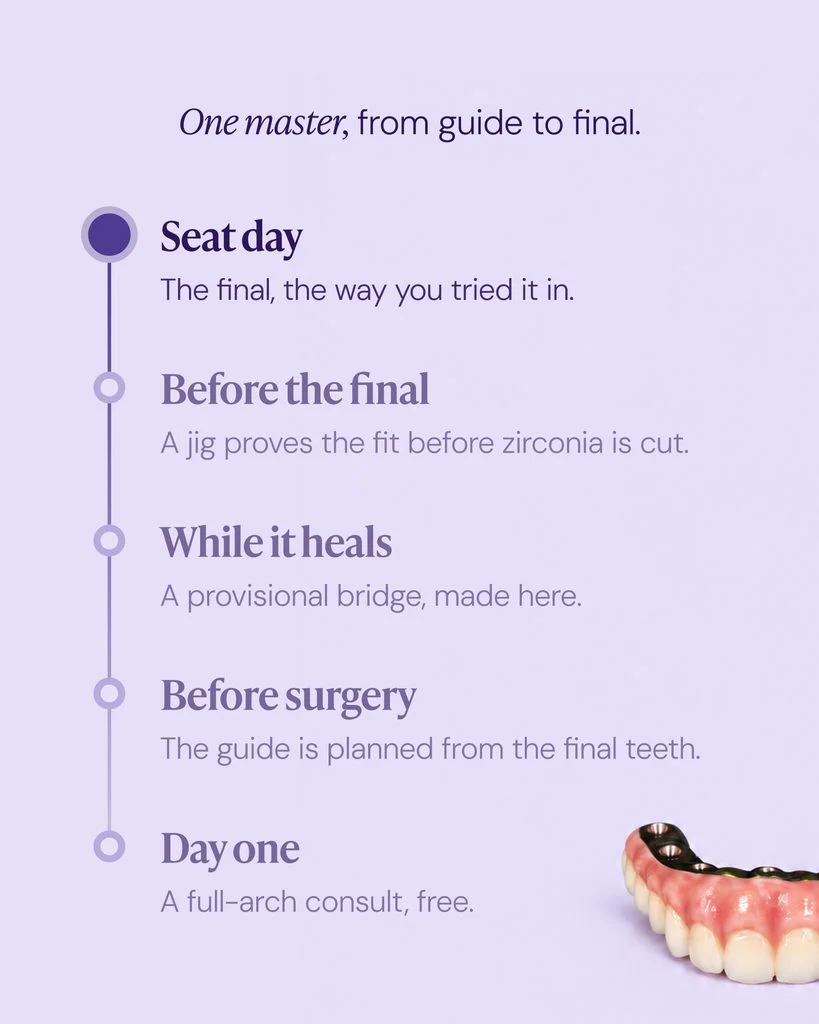
1. Start With the Final Smile—Before Surgery
Predictability can begin even earlier.
Before surgery, the question becomes:
Will the implants be positioned where the final teeth need them?
With a prosthetically driven workflow, the final restorative position informs the guide rather than treating the surgical and restorative stages as completely separate processes.
Dentlink’s linkGuide surgical guide workflow takes this crown-first approach: the final tooth position is planned first, the implant is positioned beneath it, and the dentist approves the plan before the guide is printed.
For full-arch implant cases, this means surgical planning can begin with the restorative outcome already in view.
2. Use the Provisional as More Than a Temporary
While the implants heal, the provisional restoration gives both the dentist and patient something extremely useful:
a chance to see the planned smile before the final restoration is made.
Shape, tooth position, esthetics, and the overall appearance of the arch can be evaluated before committing to the final zirconia.
At Dentlink, the provisional and final restoration are handled within the same laboratory workflow.
That continuity matters.
Instead of the final restoration becoming a completely new interpretation of the case, the confirmed information from earlier stages can continue forward.
3. Verify the Fit Before Cutting the Zirconia
This may be one of the most important checkpoints in an All-on-X workflow.
Before the definitive zirconia restoration is produced, Dentlink uses a verification jig to confirm the implant positions.
If the jig seats passively, the positions can move forward.
If it does not, that is the point to identify the discrepancy—not after the final restoration has already been fabricated. Dentlink’s current workflow specifically calls for rescanning before zirconia fabrication when the jig does not seat as intended. Dentlink
For the clinician, that changes the question from:
“I hope it fits when it arrives.”
to:
“We checked the fit before the final was made.”
That is a much better place to be heading into delivery.
4. Keep One Master With the Case
Full-arch cases generate a lot of information.
When responsibility moves from one technician to another at every stage, context can easily become fragmented.
Dentlink takes a different approach.
One master technician stays responsible for the individual case from the initial design through final finishing.
The technician is matched to the restoration based on the expertise the case requires, rather than being permanently assigned to every case from one dentist. That case-specific model is explained in more detail in Dental Lab Partner: Who’s Behind Your Case?
For an All-on-X case, the benefit is continuity: the person reviewing the case understands what happened earlier in the workflow and why certain decisions were made.
And when something needs clarification, communication becomes part of the workflow rather than an afterthought.
If you want to see why that communication matters clinically, read Dental Lab Communication: How Better Communication Can Reduce Chair Time.
5. The Final Restoration Should Look Like More Than “Pink Zirconia”
Fit is not the only concern in a full-arch case.
The restoration also needs to look convincing.
One area that can immediately make a full arch appear artificial is the gingiva.
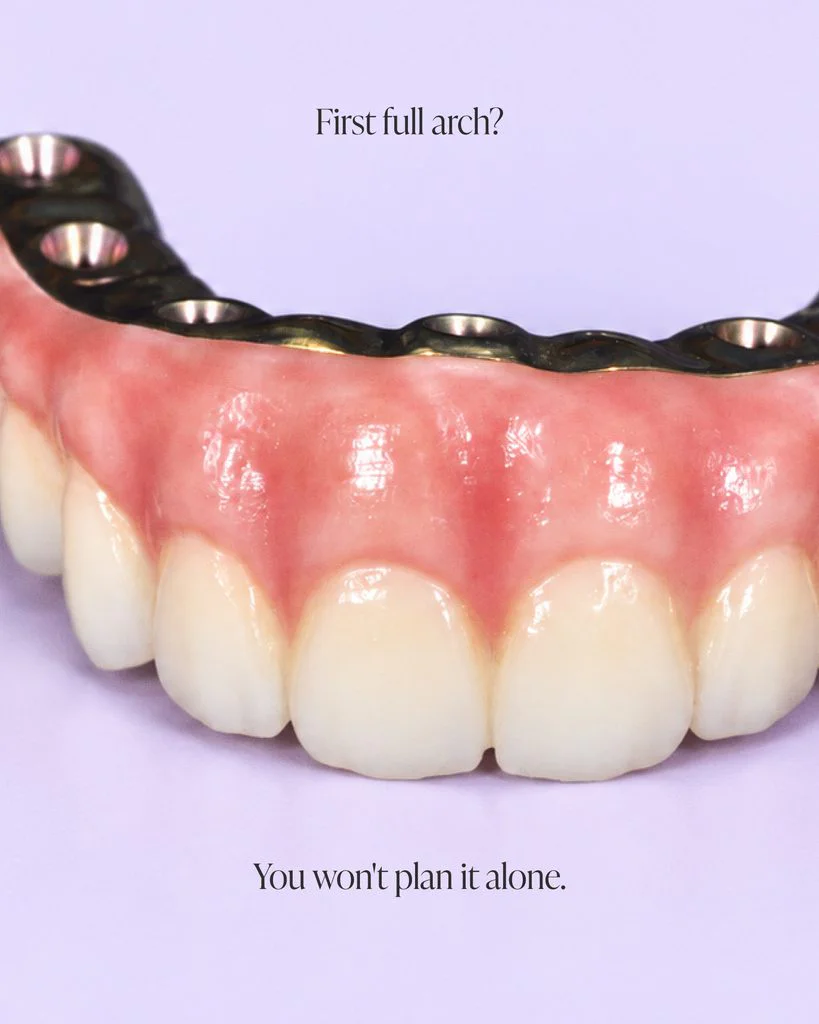
Dentlink’s final zirconia restorations are hand-characterized, with deeper gingival tones interproximally and lighter tones around the root areas to create more natural depth. The current All-on-X service describes this hand-shading process as part of the final esthetic workflow.
The goal is not simply:
white teeth + pink material.
It is a full restoration designed to look intentional as a whole.
Dentlink currently offers three full-arch restorative configurations:
- Zirconia One Body
- Zirconia Crown + Titanium Bar
- Zirconia Crown + Titanium Thimble
The appropriate option depends on the individual case and can be discussed during consultation.
What Should You Ask an All-on-X Dental Lab?
If you are evaluating a new full-arch dental lab, these are useful questions to ask before sending the case:
- Who is responsible for the case from planning through the final restoration?
- How are implant positions verified before the final zirconia is fabricated?
- Is the bite confirmed before final fabrication?
- Can the same lab support the guide, provisional, verification, and final restoration?
- What happens if the verification jig does not seat?
- How can I communicate directly with the technician reviewing the case?
- What support is available before I commit to the workflow?
The point is not to find a lab that simply says it “does All-on-X.”
It is to understand how the lab controls uncertainty throughout the case.
First All-on-X Case With Dentlink? Start With the Consult.
You do not have to know every answer before contacting the lab.
In fact, Dentlink’s All-on-X workflow starts with a free full-arch consultation.
Send a scan or impression and a master technician can review the case with you before fabrication begins. From there, the same workflow can support the case from guide through provisional, verification, and final restoration
All-on-X is complex. Your lab workflow can still be predictable.
👉 Start with a free All-on-X consultation and see how Dentlink supports the case from guide to final.
Frequently asked questions
What is an All-on-X dental lab?
Why is a verification jig used in All-on-X cases?
What materials are used for All-on-X restorations?
Can I consult with Dentlink before sending an All-on-X case?
Your first crown is on us.
Free implant crown, free scanbody kit, and $200 off your next case. Just send your first scan.
Create your Dentlink account, register your clinic, add Dentlink as your lab in your scanner software, then send your case.