Looking for a Dental Lab for Crowns? Start With What Happens at the Chair
“It fits like a glove.”
That was how one dentist described a recent crown case.
For dentists looking for a dental lab for crowns, fit is more than a technical detail. It affects how much time you spend adjusting, whether the appointment stays on schedule, and whether the patient leaves in one visit or comes back for another.
A crown that seats predictably can make the appointment feel routine.
A crown that does not can change the rest of your afternoon.
So when you evaluate a new dental lab, one of the simplest questions to ask is this:
What happens when the crown reaches the chair?
A Good Dental Crown Fit Protects More Than Chairtime
Imagine a crown delivery appointment booked for 4:00.
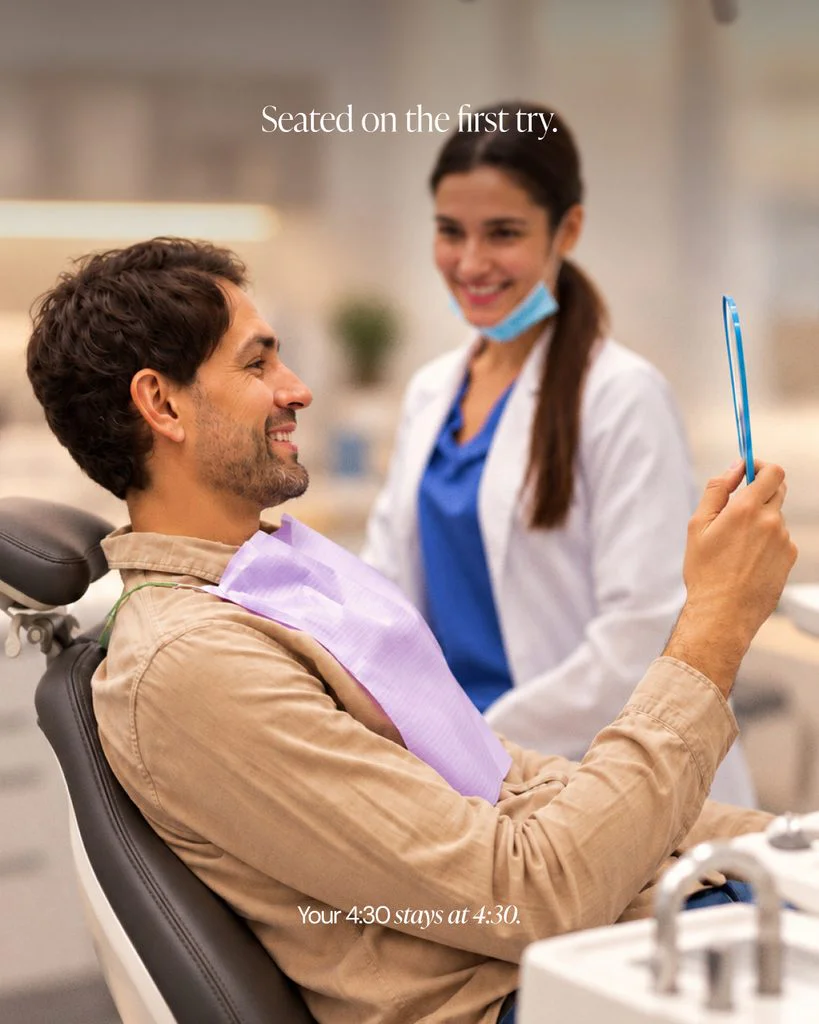
The restoration seats. Contacts, margins, and occlusion are where you expect them to be. The patient bites down, you make little or no adjustment, and your 4:30 appointment still starts at 4:30.
That is what predictable dental crown fit looks like in practice.
When the fit is inconsistent, the cost is not just a few extra minutes with a handpiece. It can mean:
- More chairside adjustments
- A longer appointment
- A patient waiting in the next operatory
- Another scan or impression
- A remake and second delivery appointment
- More communication between your practice and the lab
That is why crown fit should be one of the first things dentists evaluate when choosing a dental crown lab.
What Makes a Dental Lab for Crowns More Predictable?
Predictable restorations do not begin on delivery day.
They begin with how the case is handled at the lab.
A crown passes through multiple decisions before it reaches your chair: margin interpretation, emergence profile, proximal contacts, occlusion, material selection, design, finishing, and final quality control.
When responsibility for those decisions is fragmented, important details can get lost between steps.
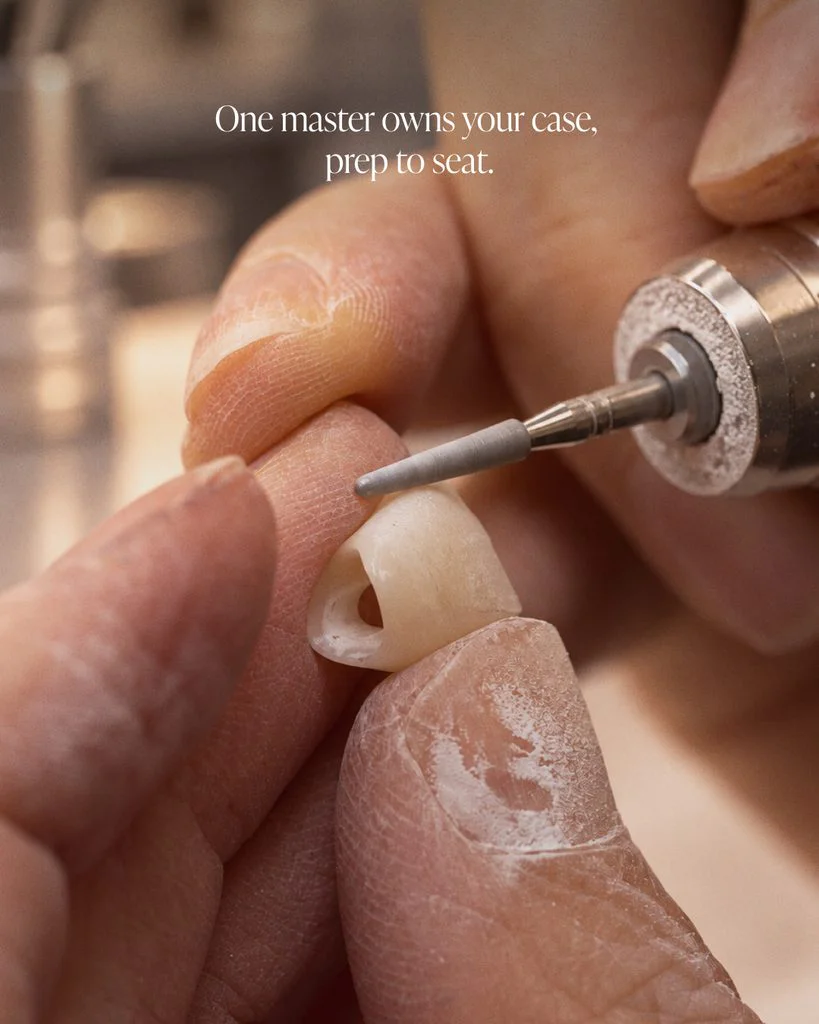
At Dentlink, one master technician owns each case from prep to seat.
The same case is followed through the workflow rather than being treated as another restoration moving through a queue.
That accountability matters because fit is not created by one isolated step. It is the result of many small decisions made consistently throughout the case.
One Case. One Master.
For the dentist, the benefit is simple: there is clear ownership of the restoration.
For the technician, it means seeing the case as a whole—not only one production step.
The master reviews the scan, works through the restoration, and checks the details before it ships.
That creates a more direct line between what you prescribed and what eventually reaches the chair.
Learn more about how Dentlink works.
Less Adjusting. More Predictable Seating.
Dentists rarely switch labs because they want a different-looking shipping box.
They switch because something in the clinical workflow is costing them time.
Maybe contacts routinely need adjustment.
Maybe crowns fit the model but do not seat the same way intraorally.
Maybe remake cases require too many emails and too much follow-up.
Or perhaps the lab is generally “fine,” but the outcome changes depending on who happened to work on the case.
A reliable crown and bridge dental lab should reduce that uncertainty.
When the restoration seats as expected, the benefit is immediately visible:
Less adjusting. More predictable seating. A schedule that stays on track.
That is the standard a lab relationship should move toward.
Remake Rate Is One Way to Measure That Consistency
Every dental lab can talk about quality.
Outcomes make that claim easier to evaluate.
At Dentlink, fewer than 1 in 100 implant crowns come back for a remake.
It is important to be specific here: this figure refers to implant crowns, not every restoration produced by the lab.
Why does that number matter?
Because a remake affects much more than the cost of manufacturing another crown. For the practice, it can mean another appointment, another conversation with the patient, additional staff coordination, and chairtime that was supposed to be used for something else.
And if a Dentlink case does need to come back, the remake is $0.
For dentists comparing an implant crown dental lab, asking about remake rates—and exactly what those rates measure—can provide a much clearer picture than a general promise of “high quality.”
Want to see how that translates chairside?
Read what dentists say about fit, adjustment time, and smoother delivery appointments in What Makes a Reliable Dental Lab? Real Feedback from Dentists.
Your Digital Workflow Should Not Create More Work
Choosing a digital dental lab should make the restorative workflow simpler, not force the practice to learn an entirely new system.
Dentlink works with the scanner you already use. Cases can be sent from major scanner systems or as an STL from an open system.
Once Dentlink is added as your lab, the scanner becomes the starting point of the case.
That gives the technician the information needed to review margins, bite, and other case details before fabrication begins—and gives the practice a more direct workflow from scan to seat.
Learn how to start → Dental Lab Services
What Should You Look for When Choosing a Dental Lab for Crowns?
Before committing meaningful case volume to a new lab, ask questions that reveal how the lab actually works.
1. Who owns the case?
Is there one technician responsible for the restoration, or does the case move between multiple people without clear ownership?
2. How does the lab check fit before shipping?
Ask how margins, contacts, and occlusion are reviewed before the restoration leaves the bench.
3. What is the remake rate?
And more importantly, ask what type of cases that number applies to.
A precise answer is more useful than a broad quality claim.
4. What happens when something does not fit?
A strong remake policy tells you how the lab handles the exception—not only the successful cases.
5. Can the lab work with your current scanner?
Changing labs should not require changing the digital workflow your team already knows.
6. Can you test the lab before committing?
Ultimately, a crown delivered to your own chair tells you more than a brochure ever will.
The Best Way to Evaluate a Dental Lab? Send One Case.
You can compare materials, turnaround times, price lists, and technology.
But the most useful test of a dental lab for crowns happens when the restoration reaches your patient.
Does it seat predictably?
How much do you adjust?
How does the patient respond?
And does your next appointment still start when it should?
That is why Dentlink offers new clinics their first case free.
Send a crown, implant crown, or linkGuide. No card. No contract.
See how the case fits into your own workflow before deciding what comes next.
Made by Masters.
Ready to See How Your First Case Fits?
Frequently Asked Questions
What should dentists look for in a dental lab for crowns?
Look for predictable fit, clear case ownership, experienced technicians, compatibility with your scanner, transparent remake policies, and reliable communication. The best way to evaluate these factors is to test the lab with an actual clinical case.
Why is dental crown fit important?
Predictable dental crown fit can reduce chairside adjustment, help appointments stay on schedule, improve the patient experience, and lower the likelihood of unnecessary remakes.
What is Dentlink’s implant crown remake rate?
Fewer than 1 in 100 Dentlink implant crowns come back for a remake. This figure specifically refers to implant crowns.
Does Dentlink work with digital scanners?
Yes. Dentlink accepts cases from major scanner systems and open STL workflows, allowing practices to use the scanner they already have.
Can I try Dentlink before switching dental labs?
Yes. New clinics can send their first eligible case free, allowing dentists to evaluate the workflow and restoration before committing additional case volume.
Your first crown is on us.
Free implant crown, free scanbody kit, and $200 off your next case. Just send your first scan.
Create your Dentlink account, register your clinic, add Dentlink as your lab in your scanner software, then send your case.