E.max Veneers: When Strength and Esthetics Both Matter
When a veneer case calls for more strength, esthetics still matter.
That balance is one reason E.max veneers have become an important option in modern cosmetic and restorative dentistry.
Made from lithium disilicate glass-ceramic, E.max combines greater mechanical strength than traditional feldspathic porcelain with the optical qualities needed for highly esthetic anterior restorations.
But material selection is only part of the equation.
Case selection, preparation, communication with the lab, fabrication technique, and final characterization all influence the result.
Built for strength. Finished for esthetics.
What Are E.max Veneers?
E.max veneers are thin ceramic restorations made from lithium disilicate glass-ceramic.
Lithium disilicate is valued in restorative dentistry because it combines mechanical strength with translucency and esthetic potential. This allows it to be used for anterior restorations where durability matters, but an opaque or overly uniform result would be undesirable.
Depending on the laboratory workflow, lithium disilicate restorations can be fabricated using CAD/CAM milling or a press technique before undergoing the finishing and characterization stages.
For the dentist, however, the fabrication method is only one part of the decision.
The more important question is what the case requires.
Why Do Dentists Choose E.max Veneers?
There is no single veneer material that is ideal for every patient.
E.max veneers become particularly relevant when a case requires a balance between strength and esthetic control.
Greater Strength With Esthetic Potential
One of the main differences between lithium disilicate and traditional feldspathic porcelain is mechanical strength.
Lithium disilicate provides greater fracture resistance while maintaining optical properties suitable for esthetic restorations.
That makes it useful when the clinician wants more material strength without automatically moving toward a more opaque restorative option.
At the same time, strength alone does not make a successful veneer.
Shape, shade, translucency, surface texture, and how the restoration interacts with the surrounding dentition remain critical to the final result.
For a closer look at these details, read What Makes a Dental Restoration Look Natural?.
E.max vs. Feldspathic Porcelain Veneers
E.max and feldspathic porcelain should not simply be viewed as competitors.
They offer different advantages.
Feldspathic porcelain is valued for highly individualized esthetics, delicate translucency, and the amount of control an experienced ceramist can achieve within a very thin restoration.
E.max takes a different approach.
Its lithium disilicate structure provides greater mechanical strength while still offering the translucency and shade options required for natural-looking anterior restorations.
This makes material selection a case-specific decision rather than a question of which ceramic is universally better.
If highly customized optical control and minimal thickness are the priorities, feldspathic porcelain may be considered.
If the case calls for greater material strength while maintaining strong esthetic potential, E.max may offer a different balance.
For more on the alternative approach, see Feldspathic Porcelain Veneers: What Dentists Should Know.
When Might E.max Be the Right Choice?
The decision to use lithium disilicate should begin with the clinical situation.
Factors such as the amount of remaining enamel, preparation design, underlying tooth shade, restorative space, occlusal conditions, and the desired final appearance all need to be considered.
E.max veneers may be particularly useful when a clinician wants:
- A stronger ceramic option for an anterior veneer
- Natural-looking translucency and shade
- A material suitable for adhesive bonding
- Greater resistance to fracture than traditional feldspathic porcelain
- A balance between functional demands and esthetic requirements
These advantages do not mean E.max is automatically the right answer for every veneer case.
Appropriate case selection remains essential.
How Are E.max Veneers Made?
The E.max veneer workflow differs from the traditional fabrication of a feldspathic porcelain veneer.
The case begins with the information provided by the dentist: preparation, scan or impression, shade information, photographs, desired morphology, and other restorative preferences.
From there, the laboratory establishes the design and processes the lithium disilicate restoration according to the selected fabrication workflow.
E.max restorations may be milled through a CAD/CAM process or fabricated through a press technique.
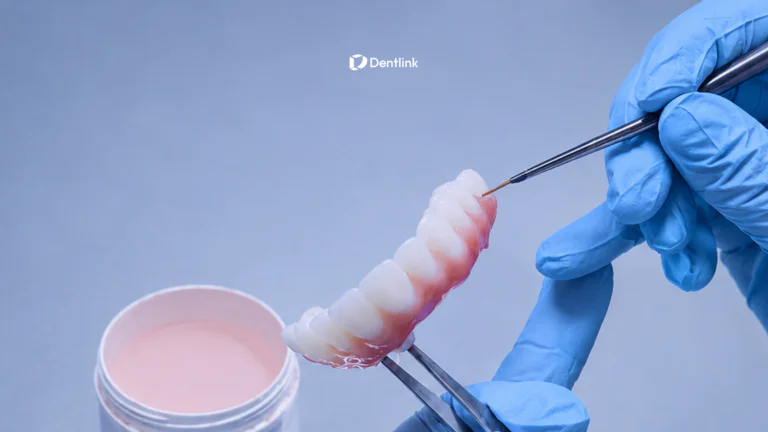
After the primary form has been created, the restoration moves through the stages needed to establish its final optical and surface characteristics.
That can include refinement of the contour, characterization, staining, glazing, and final finishing depending on the case and fabrication method.
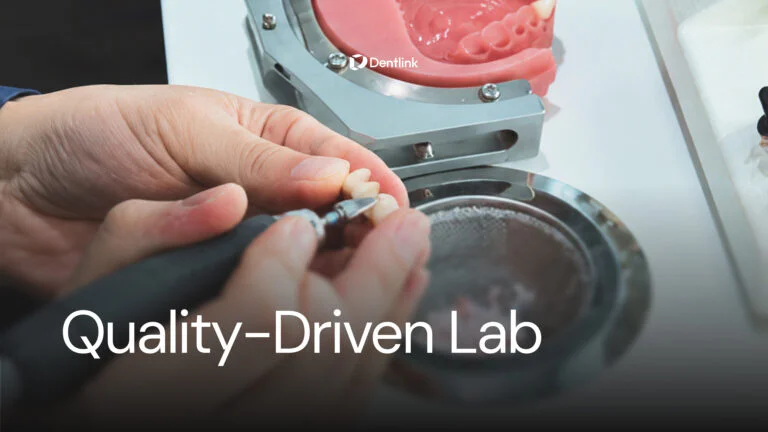
The video above gives a closer look at how an E.max veneer moves through that laboratory process.
Different material. Different workflow. Same attention to the final result.
Why the Final Finish Still Matters
A stronger ceramic does not remove the need for craftsmanship.
The initial material and digital design provide the foundation, but anterior esthetics depend on much smaller details.
The technician still needs to consider:
shade, value, translucency, contour, morphology, surface texture, and how the restoration will relate visually to the adjacent teeth.
Even with a material known for predictable mechanical properties, these final decisions can influence whether the restoration simply looks like a ceramic veneer—or integrates naturally into the smile.
That is where technician experience continues to matter.
The Material Matters. So Does the Technician.
An E.max veneer does not arrive at the laboratory as a finished restoration.
It still requires interpretation.
The technician needs to understand what the dentist is trying to achieve, how the preparation affects the restorative space, what the surrounding teeth look like, and which details need to be reproduced or modified.
Communication becomes particularly important in highly visible anterior cases.
At Dentlink, dentists work with a 1:1 designated dental technician who stays connected to the case and becomes familiar with the dentist’s restorative preferences over time.
Learn more about why working with a 1:1 dental technician changes the way you work with a dental lab.
E.max Veneers and Cosmetic Dentistry
In cosmetic dentistry, patients rarely ask for a material property.
They ask for a smile that looks natural.
For the dentist, however, getting there requires decisions about both appearance and function.
Material strength, preparation design, shade, translucency, occlusion, adhesive strategy, and laboratory execution all need to work together.
That is why E.max has become such a useful option.
It does not eliminate the trade-off between strength and esthetics.
It gives dentists another way to manage that balance.
Which Veneer Material Should You Choose?
There is no universal answer.
The decision between E.max, feldspathic porcelain, and other restorative materials should be based on the individual case.
Start with the clinical requirements:
- What needs to change?
- How much restorative space is available?
- How much enamel can be preserved?
- Does the underlying shade need to be masked?
- What are the functional demands?
- How much individual esthetic characterization does the case require?
The best veneer material is not necessarily the strongest ceramic or the most translucent one.
It is the material whose properties best match the case.
Built for Strength. Finished for Esthetics.
E.max takes a different approach to veneer fabrication than feldspathic porcelain.
Its lithium disilicate composition gives the restoration greater material strength, while its optical properties allow the technician to continue working toward the natural shape, shade, translucency, and surface character expected in an anterior restoration.
Different material. Different workflow.
Same attention to fit, detail, and the final result.
Built for strength. Finished for esthetics.
Made by Masters.
Have an E.max or Veneer Case Coming Up?
Every veneer case starts with understanding what the patient needs—and choosing the restorative approach that supports that goal.
Explore Dentlink’s veneer and cosmetic dental lab services or send your case to Dentlink to work directly with the technician behind your restoration.
Frequently asked questions
What are E.max veneers made of?
Are E.max veneers stronger than feldspathic porcelain veneers?
How strong are E.max veneers?
Clinical studies also support lithium disilicate veneers as a reliable long-term restorative option when case selection, bonding, and functional conditions are appropriate.
How are E.max veneers made?
When should dentists consider E.max veneers?
The final decision should also take into account preparation design, bonding substrate, tooth shade, restorative space, occlusion, and the overall goals of the case.
Your first crown is on us.
Free implant crown, free scanbody kit, and $200 off your next case. Just send your first scan.
Create your Dentlink account, register your clinic, add Dentlink as your lab in your scanner software, then send your case.