Feldspathic Porcelain Veneers: Why Dentists Choose Them and How They’re Made
Why do dentists still choose feldspathic porcelain veneers when there are so many ceramic materials available today?
For highly esthetic anterior cases, the answer often comes down to control.
Feldspathic porcelain allows a skilled dental technician to work with translucency, form, shade, and subtle characterization in a highly customized way. It can also be fabricated as a very thin restoration, making it particularly relevant when the treatment goal includes conservative tooth preparation and natural-looking esthetics.
But the material alone does not create the result.
With feldspathic porcelain veneers, case selection, communication, fabrication technique, and the experience of the technician all matter.
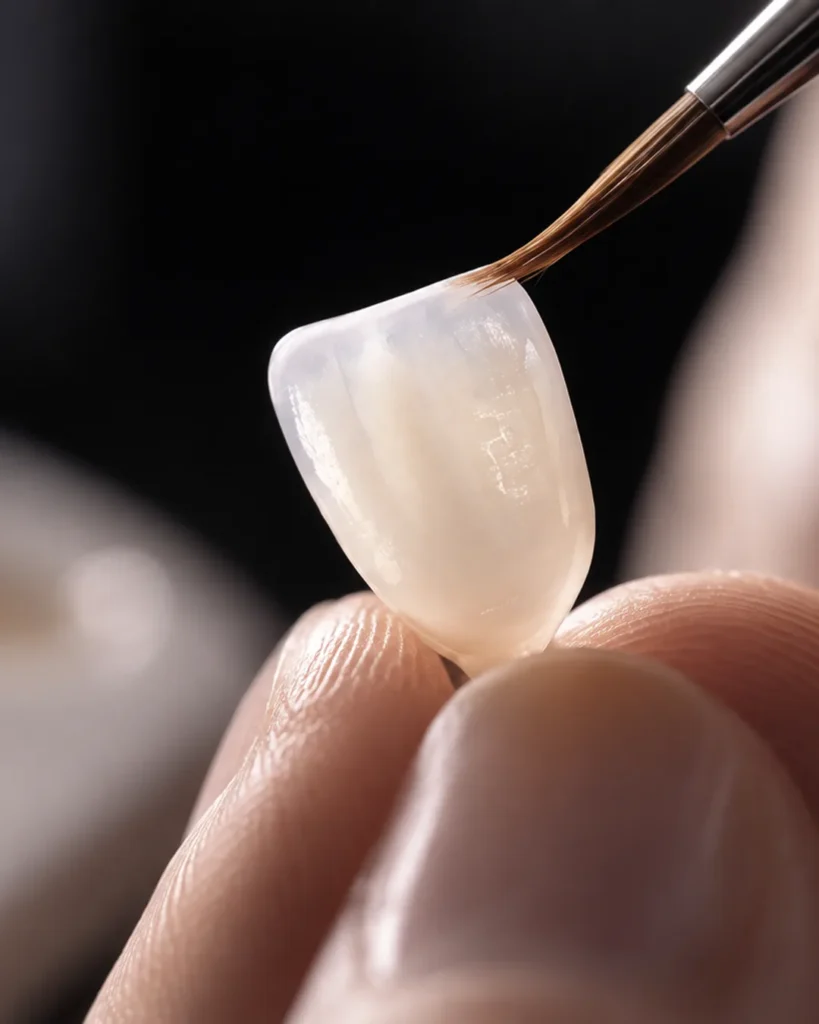
Layer by layer. Made for natural esthetics.
What Are Feldspathic Porcelain Veneers?
Feldspathic porcelain veneers are thin ceramic restorations commonly used in cosmetic dentistry to improve the shape, proportion, shade, or overall appearance of anterior teeth.
Feldspathic porcelain is known for its optical qualities. Its translucency can help reproduce the way natural enamel interacts with light, which is one reason the material continues to be used in highly esthetic veneer cases.
Unlike stronger ceramic materials that may be milled or pressed into their primary form, traditional feldspathic porcelain can be incrementally built and fired by a dental ceramist.
This gives the technician significant control over the visual character of the final restoration.
That control, however, also makes the material highly technique-sensitive.
Why Choose Feldspathic Porcelain Veneers?
There is no single veneer material that is right for every case.
The value of feldspathic porcelain veneers becomes especially clear when the clinical goal calls for a delicate, highly customized esthetic result.
Natural Translucency
Natural teeth are not one uniform shade or opacity.
Light travels through enamel differently across the cervical, body, and incisal areas of a tooth. Feldspathic porcelain gives an experienced ceramist the ability to recreate subtle differences in translucency, value, and character.
For anterior restorations—particularly where the veneer needs to integrate closely with neighboring natural teeth—these optical details can make a meaningful difference.
If you want to explore this topic further, see What Makes a Dental Restoration Look Natural? for a closer look at morphology, shade, translucency, texture, and surface characterization.
Conservative Restorative Options
Another advantage of feldspathic porcelain is the ability to fabricate relatively thin restorations.
In appropriately selected cases, this can support a conservative preparation approach and help preserve enamel.
That does not mean every feldspathic case should be minimal-prep or no-prep.
Tooth position, preparation shade, restorative space, desired color change, occlusion, and overall treatment goals still need to be considered before the material is selected.
The important point is that feldspathic porcelain veneers can offer dentists flexibility when preservation of tooth structure and esthetics are both priorities.
When Does Feldspathic Porcelain Make Sense?
Material selection should begin with the case—not with a preference for one ceramic over another.
Feldspathic porcelain may be considered when a dentist is working with an anterior case where natural translucency, fine characterization, and conservative restoration design are important.
It can be particularly valuable when the existing tooth structure provides a favorable foundation for bonding and when significant masking of a dark underlying substrate is not the primary restorative requirement.
Cases involving heavier functional demands, limited enamel, significant discoloration, or different restorative requirements may lead the clinician and laboratory to consider other materials.
That is why the better question is not:
“Is feldspathic porcelain the best veneer material?”
It is:
“Does feldspathic porcelain fit the clinical and esthetic goals of this case?”
What Matters Most in a Feldspathic Veneer Case?
Because feldspathic porcelain is delicate and highly customizable, several factors become especially important.
The first is case selection.
The dentist needs to consider the preparation, available enamel, occlusion, underlying tooth shade, restorative space, and final esthetic objective before choosing the material.
The second is communication with the laboratory.
Photos, shade information, preparation details, desired morphology, surface texture, and the dentist’s preferences all give the technician more information to work with.
And the third is the technician behind the restoration.
With a material this technique-sensitive, fabrication is not simply a matter of selecting a ceramic and following a machine-generated process.
The technician has to interpret the case.
How Are Feldspathic Porcelain Veneers Made?
The production of feldspathic porcelain veneers involves a series of carefully controlled laboratory steps.
After the case information is reviewed, the technician establishes the intended form and restorative design.
Porcelain is then applied and developed through the fabrication process, with repeated attention to contour, thickness, shade, and optical properties.
The restoration is fired, refined, and finished until the intended form and surface characteristics are achieved.
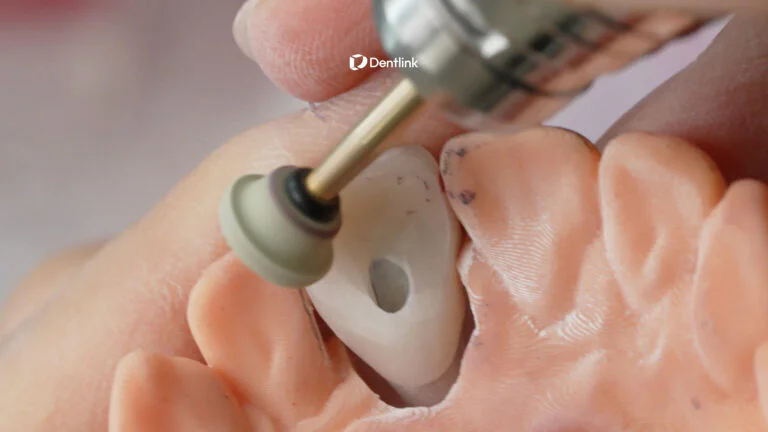
You can see that process in the workflow video above.
One important part of this workflow is porcelain layering. Layering gives the ceramist a way to create depth and control translucency within a very limited restorative space.
We will take a closer look at that process—and the precision involved in building feldspathic porcelain layer by layer—in a separate Behind the Lab feature.
Why the Dental Technician Matters
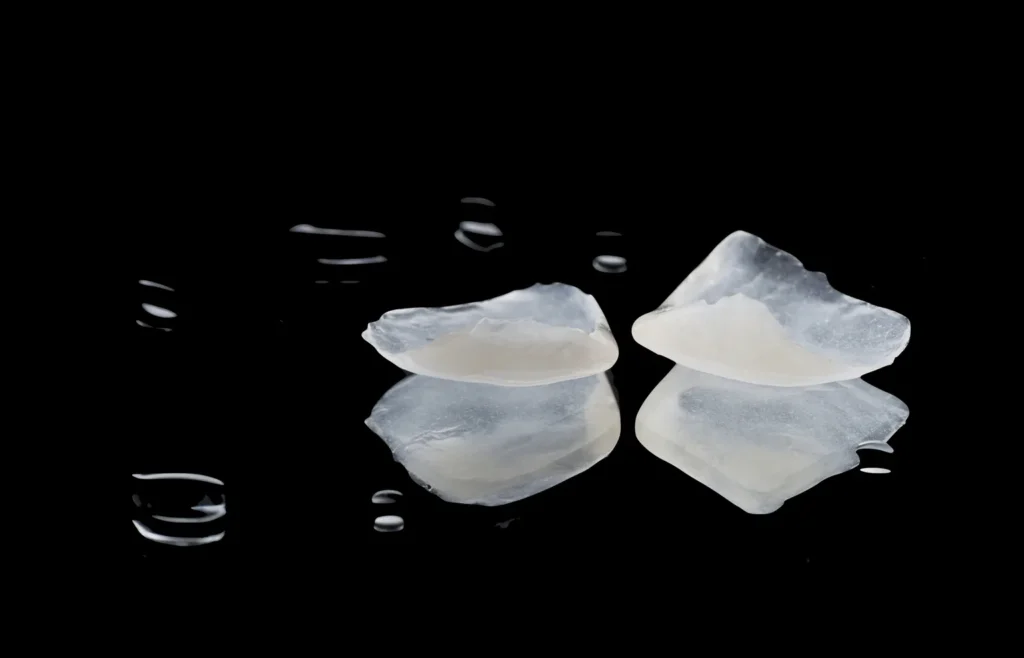
A feldspathic veneer may be only a fraction of a millimeter thick, but a significant amount of judgment goes into that space.
The technician has to understand not only how the restoration should look on the bench, but how it should relate to the preparation, adjacent teeth, smile, and clinical prescription.
Small decisions in contour, value, translucency, texture, and finishing can influence the final appearance.
This is why technician experience matters so much with highly esthetic restorations.
At Dentlink, dentists work with a 1:1 designated dental technician, creating continuity from one case to the next. The technician can become familiar with the dentist’s preferences and communicate directly when case-specific details need clarification.
Read more about why working with a 1:1 dental technician can change the way you work with your dental lab.
Feldspathic Porcelain vs. Other Veneer Materials
Dentists today have several ceramic options for veneer cases, including lithium disilicate materials such as e.max.
These materials should not be viewed simply as better or worse alternatives to one another.
They offer different combinations of optical properties, strength, thickness, fabrication methods, and clinical indications.
Feldspathic porcelain is valued for its translucency and ability to support highly individualized esthetics.
Lithium disilicate, by comparison, offers greater material strength while still providing strong esthetic potential.
Choosing between them depends on what the case requires.
In the next feature in this series, we will take a closer look at the e.max veneer workflow and how its fabrication approach differs from feldspathic porcelain.
Are Feldspathic Porcelain Veneers Durable?
Although feldspathic porcelain is more delicate than higher-strength glass ceramics, that does not mean it should be considered a short-term material.
Clinical research has reported high survival rates for feldspathic porcelain veneers when they are used under appropriate conditions and bonded to enamel.
What those studies also reinforce is that long-term success depends on more than the ceramic itself.
Case selection, preparation design, bonding substrate, clinical technique, laboratory execution, and functional conditions all contribute to the outcome.
For dentists, material selection therefore needs to remain part of a larger restorative plan rather than an isolated decision.
Why Craftsmanship Still Matters in Cosmetic Dentistry
Digital dentistry has transformed the way restorations are designed, communicated, and produced.
But cosmetic dentistry still includes situations where technology provides only part of the answer.
Highly esthetic veneers require an understanding of how shape, texture, shade, translucency, and light work together.
Feldspathic porcelain makes that especially visible.
The material gives the technician significant freedom—but that freedom only becomes valuable when it is paired with skill and experience.
A beautiful feldspathic veneer is not simply made from the right porcelain.
It is the result of the right material, the right case, and the right hands working together.
Layer by layer. Made for natural esthetics.
Made by Masters.
Have a Veneer Case Coming Up?
The right veneer material starts with the goals of the case.
Share your clinical requirements, patient photos, shade information, and preferences with your Dentlink technician so the restorative approach can be considered from the beginning.
Your first crown is on us.
Free implant crown, free scanbody kit, and $200 off your next case. Just send your first scan.
Create your Dentlink account, register your clinic, add Dentlink as your lab in your scanner software, then send your case.