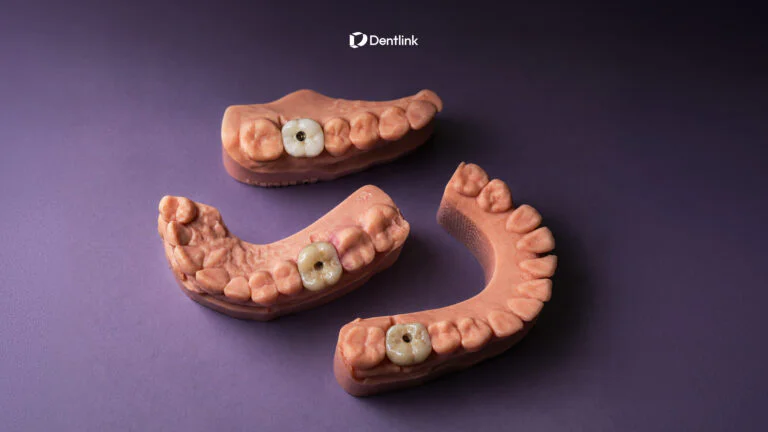
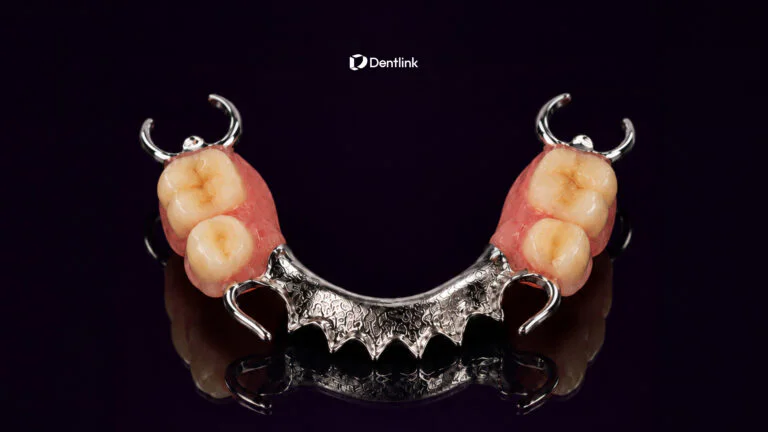
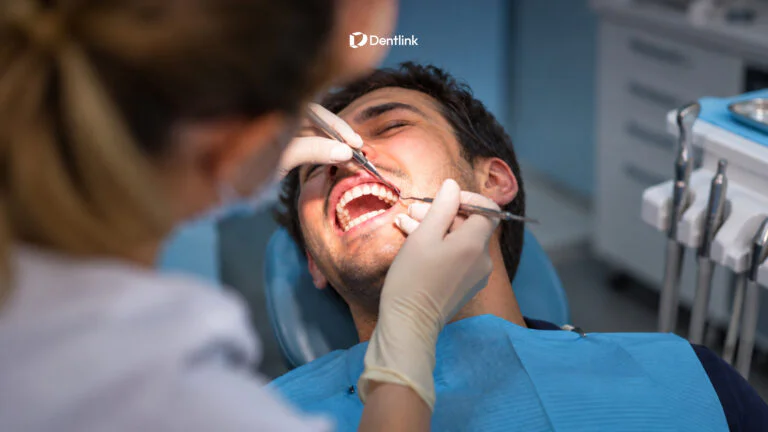
Dental Crown Fabrication: Why Every Adjustment Matters
Dental crown fabrication involves more than creating a restoration from a digital design. The final result also depends on how the crown is examined, refined, and adjusted before delivery.
For dentists, those details matter at the chair. Crown contours, occlusal relationships, and contact areas are all part of the clinical evaluation when seating a restoration.
At Dentlink, our dental technicians pay close attention to these details during fabrication.
In this edition of Made by Masters, we’re taking a closer look at the hands-on grinding and adjustment process behind a dental crown.
Dental Crown Fabrication: The Work Behind the Final Restoration
Digital technology has changed how dental crowns are designed and manufactured. However, completing the digital design doesn’t mean every step of fabrication is finished.
Once a restoration is manufactured, it may require additional evaluation and refinement.
This is where a dental lab technician’s experience becomes particularly valuable.
During the finishing process, technicians examine the restoration and make adjustments based on its design requirements and physical characteristics.
The goal is to refine the restoration while maintaining the intended contours and functional design.
Why Grinding and Adjustment Matter in Dental Crown Fabrication
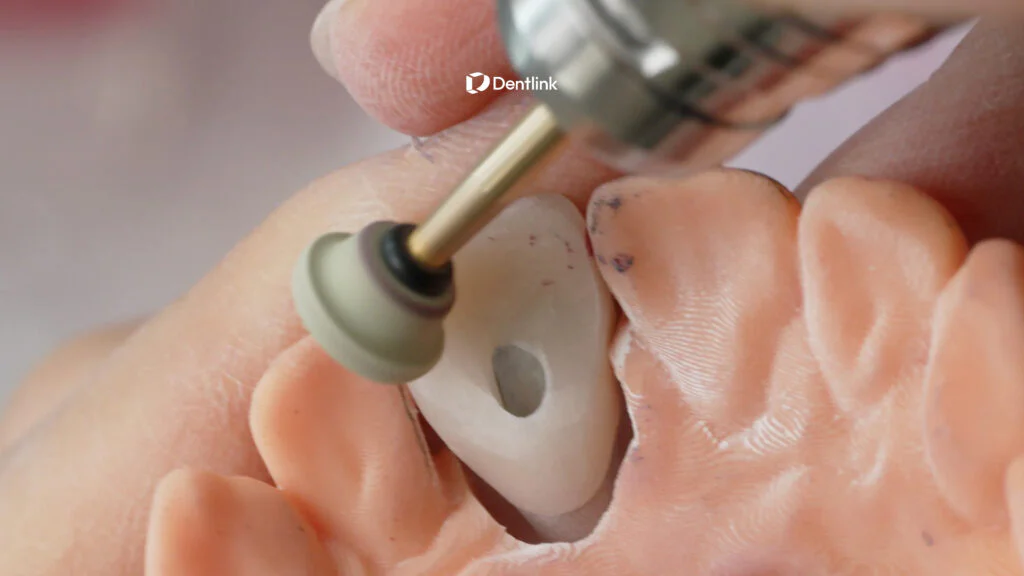
Grinding isn’t simply about removing material. It’s a controlled process that requires the technician to consider where refinement is needed and how much adjustment is appropriate.
In our video, you’ll see a Dentlink technician carefully working on a restoration with rotary instruments, examining it between adjustments, and continuing the refinement process.
These movements may be small, but each requires attention and judgment.
1. Refining Crown Contours
The contours of a dental crown influence how the restoration relates to surrounding teeth and soft tissues.
During fabrication, technicians examine the crown’s shape and refine areas that require adjustment.
The objective is to maintain the intended anatomical form while addressing details identified during the finishing process.
2. Reviewing Occlusal and Contact Areas
Occlusal relationships and proximal contacts are important considerations during crown fabrication.
Depending on the restoration and available records, technicians may evaluate these areas and make appropriate refinements before delivery.
For dentists, careful laboratory evaluation is valuable because excessive chairside adjustment can interrupt the planned seating appointment.
However, laboratory checks do not replace the dentist’s final clinical assessment of the restoration.
3. Making Controlled Adjustments
One of the most important parts of dental crown grinding is knowing when and where to adjust.
Removing too much material can alter the intended contours or compromise the restoration.
That’s why refinement requires more than the right equipment. It calls for a skilled technician who understands the restoration and its design requirements.
Every adjustment should serve a purpose.
This is the craftsmanship behind the work you see in our Made by Masters series.
What Should Dentists Look for in a Dental Crown Lab?
When choosing a dental lab for crown restorations, manufacturing technology is only one consideration.
It’s also worth understanding how the lab handles the work between fabrication and delivery.
Consider these questions:
- Finishing and refinement: How are restorations evaluated and adjusted during fabrication?
- Case-specific instructions: Can the lab accommodate clinical requirements and preferences?
- Technician communication: Is there a clear way to discuss questions or request clarification?
- Case consistency: How does the lab keep track of the requirements for individual cases?
These factors can help dentists evaluate whether a dental lab is a good fit for their clinical workflow.
A Case Master Behind Every Dentlink Case
At Dentlink, each case is matched with a designated dental technician, known as a Case Master.
Your Case Master works on the assigned case, while linkTalk provides a direct communication channel between your practice and the lab.
You can share case-specific instructions, provide additional information, and clarify details as needed.
This helps keep the technician’s work connected to the requirements communicated by your practice.
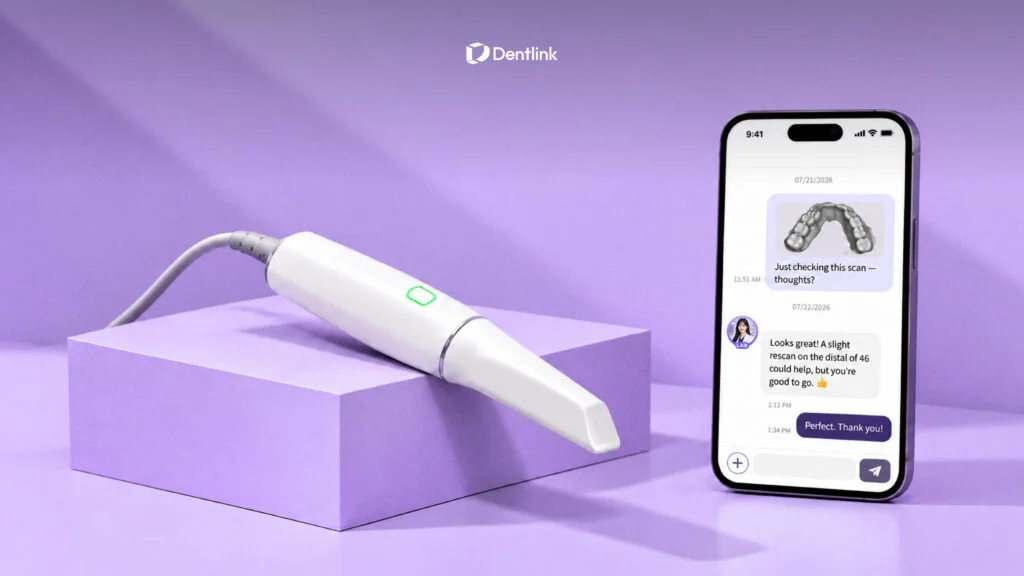
Ready to Send Your Next Crown Case?
If you’re looking for a dental lab that combines digital workflows with hands-on craftsmanship, Dentlink is ready for your next case.
Already using an intraoral scanner?
You can connect with Dentlink through your existing scanner and send your crown case directly.
No new software to learn. Add Dentlink to your scanner and send your case.
Need help connecting? Follow our Scan & Send guide to get started.
Made by Masters. One Adjustment at a Time.
Behind every finished crown are decisions that may never be visible at the chair.
Where to refine. What to preserve. When to take another look.
At Dentlink, our technicians bring their experience to these details throughout the fabrication process.
Watch the craftsmanship. Then put it to work on your next case.
Have a crown case coming up? Send it to Dentlink.
Frequently asked questions
What is grinding in dental crown fabrication?
Why do dental crowns need adjustments during fabrication?
Can laboratory adjustments eliminate chairside adjustments?
How can dentists send crown cases to Dentlink?
Your first crown is on us.
Free implant crown, free scanbody kit, and $200 off your next case. Just send your first scan.
Create your Dentlink account, register your clinic, add Dentlink as your lab in your scanner software, then send your case.