Implant Crown Delivery: What Should Be Checked Before It Reaches Your Chair?
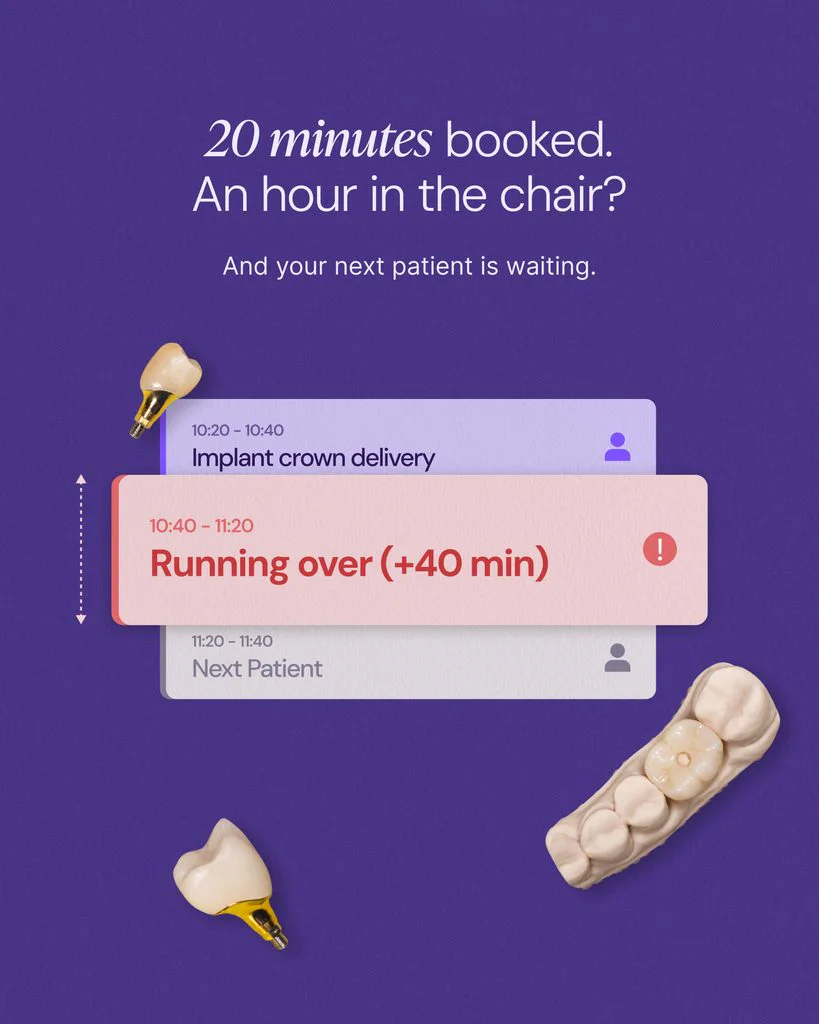
20 minutes booked. An hour in the chair?
And your next patient is waiting.
An implant crown delivery appointment that runs longer than expected doesn’t just affect one patient. It can put pressure on the rest of your schedule.
Sometimes, the extra time comes from clinical factors you can’t fully predict. Other times, it’s spent checking contacts, evaluating occlusion, or resolving details that could have been addressed before the restoration left the lab.
That’s why a smoother implant crown delivery starts long before the patient sits in your chair.
It starts with what your dental lab checks before shipping.
Why Does Implant Crown Delivery Take Longer Than Planned?
Every implant case has its own clinical considerations. Implant position, surrounding tissue, restorative design, and the patient’s occlusion can all influence the final delivery.
But when a restoration arrives, there are certain details you should already be able to rely on.
The scan has been reviewed. The margins have been checked. Contacts and occlusion have been evaluated against the records you provided.
When those details aren’t addressed properly, the delivery appointment may involve additional troubleshooting.
And those extra minutes can affect more than the case you’re working on.
The next patient may be waiting. Your assistant may need to adjust the schedule. A routine delivery can turn into an appointment that requires more attention than planned.
The goal isn’t to eliminate every possible chairside adjustment. It’s to avoid spending valuable clinical time on preventable laboratory-related issues.
Implant Crown Delivery: Three Checks That Matter Before Shipping
A reliable implant crown dental lab should be able to explain what happens between receiving your scan and shipping the finished restoration.
At Dentlink, three checks play an important role in preparing implant crown cases for delivery.
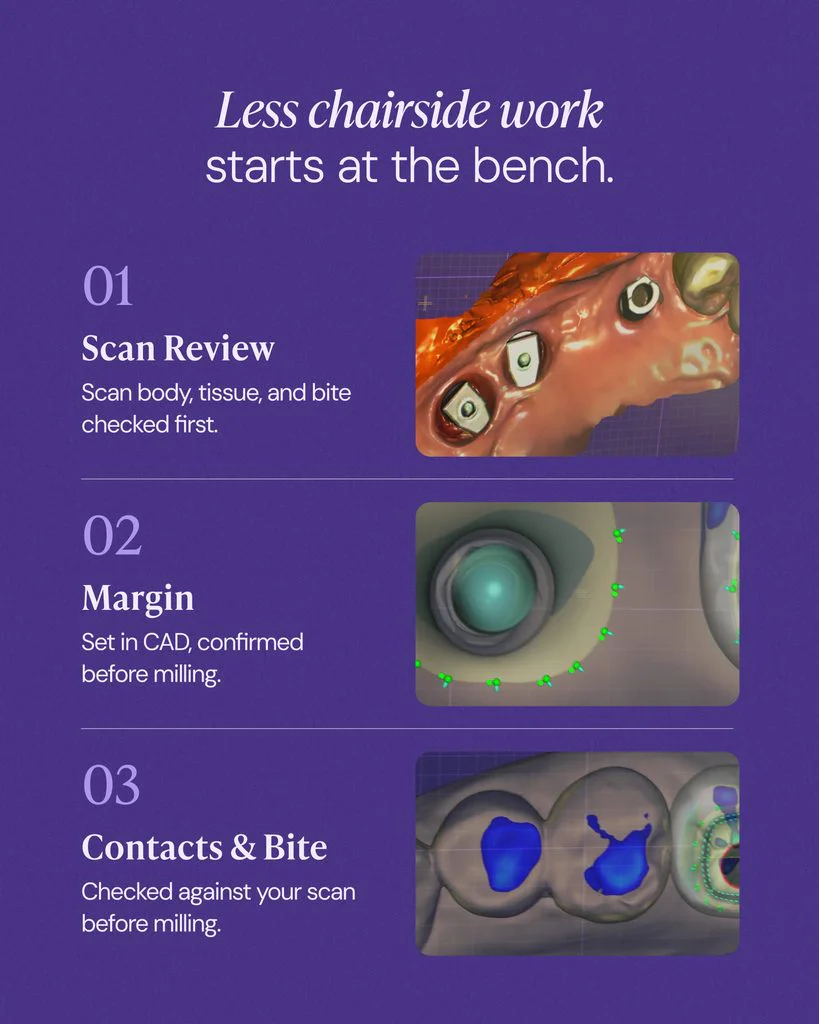
1. Scan Review: Check the Foundation Before Design
Before designing the implant crown, the assigned master technician reviews the scan data.
This includes checking:
- The scan body
- The surrounding tissue
- The recorded bite
For an implant restoration, the scan body and implant system information help establish the restorative relationship.
If the scan body isn’t properly captured or important information is unclear, the design may begin with incomplete information.
That’s why the review needs to happen before CAD design—not after the restoration has already been manufactured.
What this means at delivery: The design begins with a review of the clinical records you provided, helping reduce the risk of avoidable issues further along the process.
2. Margin Verification: Details Settled Before Milling
Margin accuracy is another important part of implant crown fabrication.
At Dentlink, the margin is defined point by point in CAD and confirmed before milling.
This review helps ensure that the planned restoration reflects the digital design requirements before manufacturing begins.
The specific restorative design may vary depending on your clinical preferences and the case requirements.
But the principle remains the same: details that can be evaluated during design should be addressed before the finished crown reaches your practice.
What this means at delivery: Margin-related design decisions are checked during fabrication rather than left solely to chairside troubleshooting.
3. Contacts and Bite: Check Against the Scan
A crown that looks right on a screen still needs to function in the patient’s mouth.
That’s why contacts and occlusion deserve attention before the case leaves the lab.
At Dentlink, the technician checks the design against the digital scan, including adjacent and opposing teeth, before milling.
Your preferences matter, too.
Some dentists prefer lighter proximal contacts. Others may request a tighter contact or a specific occlusal relationship.
Dentlink allows contact and occlusion preferences to be saved in your case template so the technician can refer to them when working on subsequent restorations.
What this means at delivery: Your lab works from both the clinical records and your stated preferences, rather than relying on a one-size-fits-all approach.
Better Implant Crown Delivery Starts With Clear Lab Communication
Quality control isn’t only about inspecting the finished restoration.
It’s also about understanding what the dentist expects before the case is made.
For example, your prescription may specify a particular occlusal contact, restorative material, or implant system.
When those details are clearly communicated, the technician has a better starting point for design and fabrication.
And when a question arises, the ability to speak directly with the technician responsible for the case can make the process easier to manage.
At Dentlink, each case is matched with a designated master technician who follows it through the fabrication process.
That technician reviews the records, works with your case requirements, and performs the checks needed before delivery.
For more on how communication shapes restorative outcomes, read What Makes a Dentist Recommend One Dental Lab Over Another?.
What Happens After the Implant Crown Is Made?
The process doesn’t end with CAD design and milling.
Before shipping, Dentlink also reviews the restoration’s shade, surface, contour, and final fit against the case records.
The finished case is checked again against the scan.
These steps are intended to identify issues before the restoration reaches your practice.
Of course, no laboratory process can guarantee that every implant crown will require zero chairside adjustments. Clinical conditions and case-specific factors still matter.
But careful review before shipping can help minimize avoidable surprises.
A dentist’s experience can offer another perspective on that process.
Village Family Dental shared this feedback after an implant crown delivery:
“The implant crown delivery was perfect. No adjustments required. Our preferences match.”
This is an individual clinic’s experience, not a guarantee for every case. Still, it reflects the kind of delivery experience that well-coordinated lab work aims to support.
If you’re evaluating restorative consistency, you may also find our article on Dental Crown Remakes and Lab Precision useful.
What Should You Ask Your Implant Crown Dental Lab?
Before sending your next implant case, consider a few practical questions:
- Does the lab review scan body, tissue, and bite information before design?
- How are margins checked before manufacturing?
- Are proximal contacts and occlusion evaluated against the scan?
- Can you communicate your contact and occlusion preferences?
- Who is responsible for the case from design through final inspection?
- What happens if the finished crown needs to be remade?
These questions help you evaluate the workflow behind the restoration—not just the final product.
You can also explore Dentlink’s Implant Crown service to see the fabrication steps, supported implant systems, material options, and delivery details.
Your Next Implant Crown Delivery Starts Before the Appointment
You can’t predict every detail of a clinical appointment.
But you can choose a dental lab that carefully reviews the details under its control.
From scan review and margin verification to contacts, occlusion, and final inspection, Dentlink’s process is designed to support a more predictable implant crown delivery.
See the difference at delivery.
Your first implant crown is free for new clinics. No card. No contract.
Ready to send a case?
Get your first case free through the Dentlink Portal →
Made by Masters.
Your first crown is on us.
Free implant crown, free scanbody kit, and $200 off your next case. Just send your first scan.

Create your Dentlink account, register your clinic, add Dentlink as your lab in your scanner software, then send your case.