Dental Crown Remakes: Why Precision Starts in the Lab
Another crown adjustment? Another remake? Another appointment running behind?
Dental crown remakes don’t just create extra work. They take valuable chair time, disrupt your schedule, and add an unnecessary step to the patient experience.
While every clinical case is different, one thing is clear: precision shouldn’t start when the crown reaches your chair. It should start in the lab.
At Dentlink, every restoration is matched with a dedicated master technician whose expertise fits the case, with careful attention to detail from design to final finishing.
Because the goal isn’t simply to make a crown.
It’s to make one that seats predictably, with fewer adjustments and fewer remakes.
Why Dental Crown Remakes Cost More Than You Think
A crown that doesn’t seat as expected can turn a routine delivery appointment into an unexpected challenge.
The dentist checks the contacts. Adjusts the occlusion. Tries the restoration again.
And if the fit still isn’t acceptable, the case may need to return to the lab.
That can mean:
- Additional chairside adjustments
- Longer delivery appointments
- Another scan or impression
- Delayed treatment completion
- Extra coordination with the dental lab
- A second appointment for the patient
For a busy dental practice, these disruptions add up.
That’s why reducing avoidable dental crown remakes matters—not just for the restoration itself, but for the entire clinical workflow.
Fewer Dental Crown Remakes Start With Precision
What does it take to create a restoration that seats as expected?
It begins long before final delivery.
Every restoration involves a series of technical decisions that can influence the outcome.
1. Understanding the Case Before Fabrication
Margins, occlusion, proximal contacts, material requirements, and clinical instructions all need careful review.
At Dentlink, each case is matched with a dedicated dental technician based on the type of restoration and expertise required.
That technician takes responsibility for the case throughout the production process, helping maintain attention to its specific requirements.
2. Precision in Every Detail
Digital design and advanced fabrication equipment play an important role in modern dental restorations.
But technology alone doesn’t eliminate the need for experienced judgment.
During finishing and adjustment, skilled technicians refine contours, contacts, and other details to help the restoration meet the intended specifications.
These small refinements can make a meaningful difference when the restoration reaches the dental chair.

One dedicated master per case. Every detail matters.
Want to see how craftsmanship contributes to the final restoration? Explore how master technicians refine implant restorations for precise fit.
3. Quality Checks Before Delivery
The last place you want to discover an avoidable fit problem is during the patient’s appointment.
Before delivery, the restoration should be checked against the case requirements, including relevant fit and finishing criteria.
At Dentlink, final quality control is part of the process of working toward a consistent, predictable result.
Because precision isn’t just about how a restoration is made.
It’s about how carefully the final result is verified.
Predictable Dental Crown Fit Means Less Chairside Work
When a crown seats as expected, the benefits extend beyond the restoration.
Fewer unnecessary chairside adjustments can help dentists:
- Complete delivery appointments more efficiently
- Reduce disruptions to the daily schedule
- Minimize avoidable follow-up visits
- Deliver a smoother patient experience
Of course, no dental lab can guarantee that every restoration will seat without adjustment. Clinical variables, impression or scan quality, and case complexity all influence the final outcome.
But a lab that prioritizes precision, skilled craftsmanship, and quality control can help reduce avoidable complications.
For a deeper look at what dentists should evaluate during crown delivery, read what predictable dental crown fit looks like at the chair.
How Dentlink Works Toward Fewer Remakes
Every lab can promise quality.
But what does that quality look like in practice?
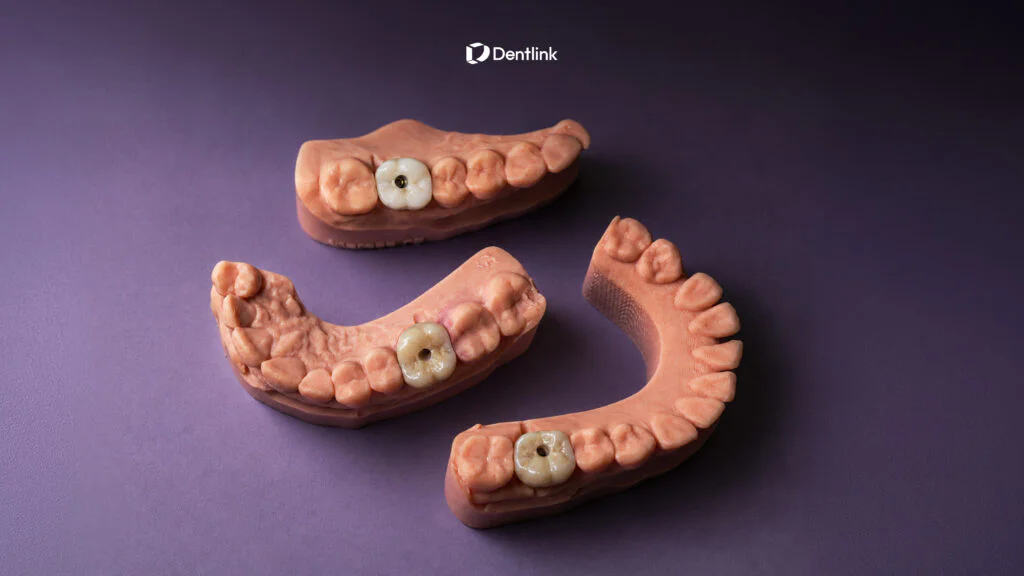
At Dentlink, fewer than 1 in 100 implant crowns are returned for remake.
This figure specifically refers to implant crowns—not all restoration types.
Behind that result is a workflow that combines:
- Case-specific master technician assignment: Each restoration is matched with a technician whose expertise suits the case.
- Digital precision: Design and manufacturing processes support accurate fabrication.
- Hands-on craftsmanship: Experienced technicians refine the details of each restoration.
- Quality control: Final checks help identify potential issues before delivery.
- Direct communication: Dentists can communicate case requirements and preferences to the technicians working on their restorations.
Together, these processes are designed to support more consistent results and reduce unnecessary remakes.
And dentists have shared what that experience can look like in practice.
From restorations requiring minimal adjustment to cases delivered without chairside modification, their experiences help illustrate the importance of precision at every stage.
Read real dentist feedback on restoration fit, quality, and chairside adjustments.
What Should You Ask a Dental Lab About Remakes?
If you’re comparing dental labs, don’t stop at turnaround time and pricing.
Ask questions that reveal how the lab manages precision and consistency:
- What is your remake rate, and which types of restorations does it cover?
- Who is responsible for my case during production?
- How do you check contacts, margins, and occlusion before delivery?
- Can I communicate directly with the technician handling my case?
- What happens if a restoration requires a remake?
The answers can help you understand what to expect before committing more cases to a new dental lab.
If you’re considering a switch, here’s how to compare dental labs using a single crown case.
Frequently Asked Questions
What causes dental crown remakes?
Dental crown remakes can result from several factors, including inaccurate impressions or scans, marginal discrepancies, occlusal problems, contact issues, material concerns, or changes in clinical conditions. Effective communication and quality control can help reduce avoidable laboratory-related errors.
How can a dental lab help reduce crown remakes?
A dental lab can help by reviewing case requirements carefully, assigning experienced technicians, using appropriate digital workflows, and performing quality checks before delivery. Clear communication with the dentist also matters.
What is Dentlink’s dental crown remake rate?
Dentlink reports a remake rate of less than 1% for implant crowns. This figure is specific to implant crowns and should not be interpreted as a remake rate for all restorations.
Can a dental lab guarantee a crown will seat on the first try?
No. Even carefully manufactured restorations may require adjustment depending on clinical conditions. The goal is to achieve a predictable fit and minimize avoidable chairside modifications.
Built for Fewer Remakes. Obsessed With Precision.
The smallest details in the lab can make a meaningful difference in the dental chair.
At Dentlink, our master technicians focus on those details so dentists can spend less time managing avoidable adjustments and more time caring for patients.
Precision made personal. Made by Masters.
The best way to evaluate a dental lab is to see how its work performs in your own practice.
Get Your First Case FREE.
Your first crown is on us.
Free implant crown, free scanbody kit, and $200 off your next case. Just send your first scan.
Create your Dentlink account, register your clinic, add Dentlink as your lab in your scanner software, then send your case.