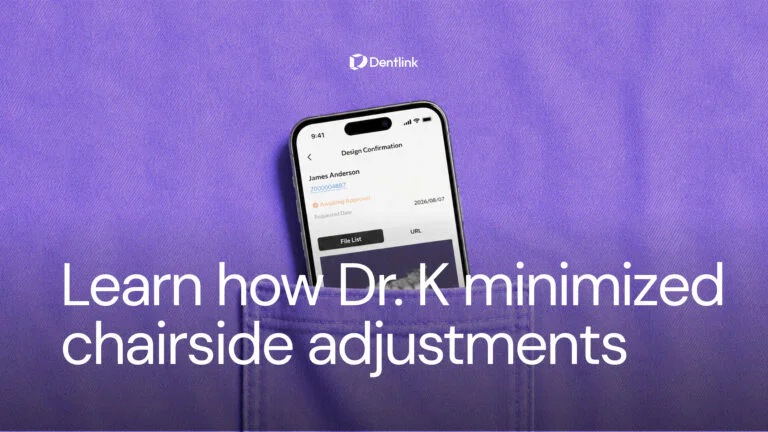
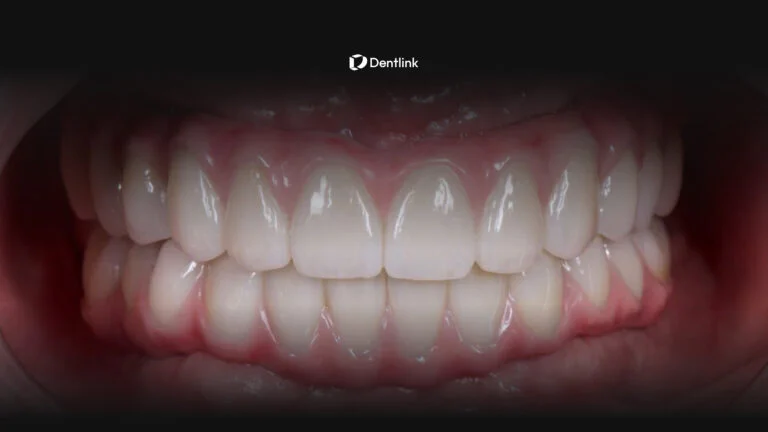
5 Questions to Ask Your Denture Lab Before Your Next Case
Before sending your next case to a denture lab, it helps to know what happens after your records leave the practice.
A finished denture may look simple when it arrives at your chair, but the result depends on multiple decisions behind the scenes—from how the case is received to how it is manufactured, finished, checked, and communicated back to you.
Not every denture lab handles those steps the same way.
So before sending your next case, here are five practical questions worth asking.
What Should You Expect From a Denture Lab?
A good lab relationship is about more than receiving the final prosthesis.
Your denture lab should be able to explain how it accepts cases, how dentures are manufactured, who reviews the finished work, and who you can speak with when questions come up.
Understanding those details before the case begins can help create clearer expectations for both the dentist and the laboratory.
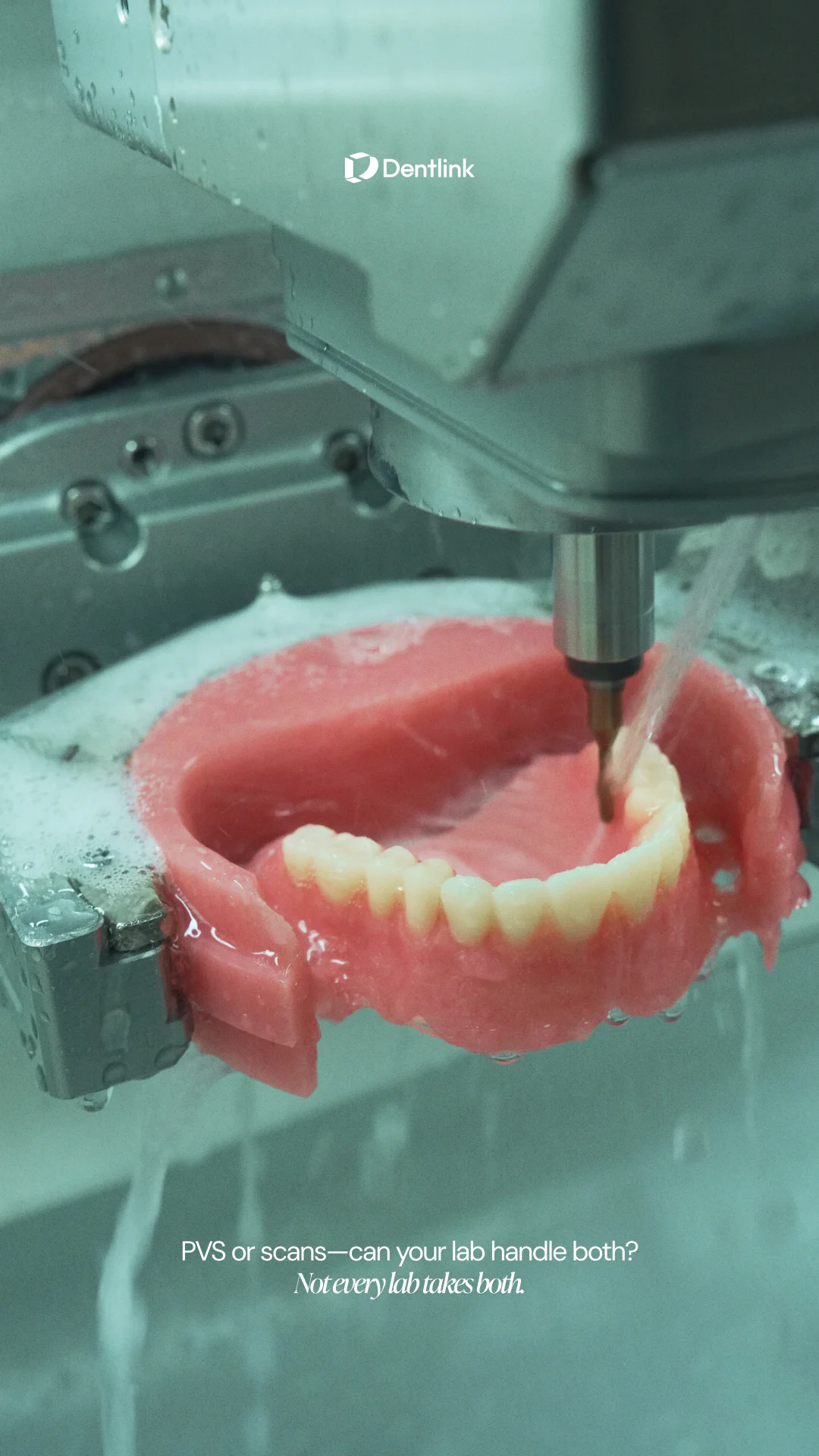
1. Can Your Lab Work With Both PVS and Digital Scans?
Every practice has its own workflow.
Some dentists prefer conventional PVS impressions for denture cases. Others have incorporated intraoral scanning into more of their clinical workflow. Depending on the patient and the case, a dentist may also choose different methods at different stages of treatment.
That is why one of the first questions to ask is simple:
Can your denture lab work with the records you prefer to send?
A digital denture does not necessarily mean every case must begin the same way.
What matters is whether the laboratory can take the clinical information you provide and move it into a controlled manufacturing workflow.
At Dentlink, denture cases can begin with either conventional PVS impressions or digital records, allowing dentists to use the impression method that fits their clinical workflow.
The starting point may vary. The goal remains the same: giving the laboratory the information needed to produce the final denture.
2. How Is the Denture Actually Made?
“Digital denture” can describe a broad category, so it is worth looking beyond the label.
Ask your lab what happens after the case is received.
Is the denture digitally designed?
How is it manufactured?
Where does milling fit into the process?
What happens after the machine stops?
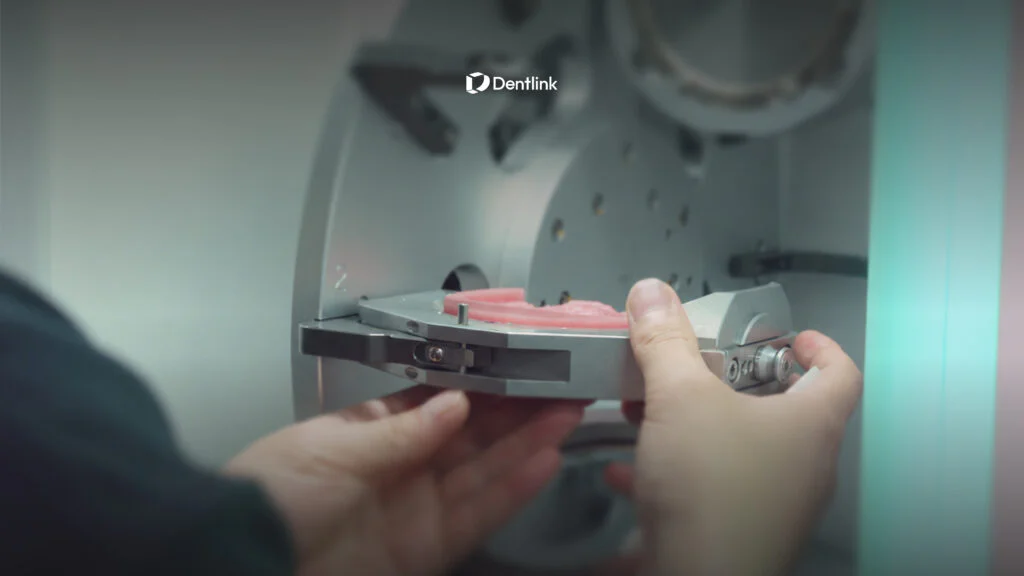
At Dentlink, the digital denture workflow combines digital design and precision manufacturing with technician finishing.
Digital manufacturing helps create a repeatable process based on the approved design, while the following finishing stages allow the technician to review and refine the physical restoration before completion.
If you want to see that process in more detail, explore our guide to Digital Denture Workflow: From CAD/CAM to Final Finish.
The important question is not simply whether your lab calls the denture “digital.”
It is whether the lab can clearly explain how the denture moves from clinical records to final manufacturing.
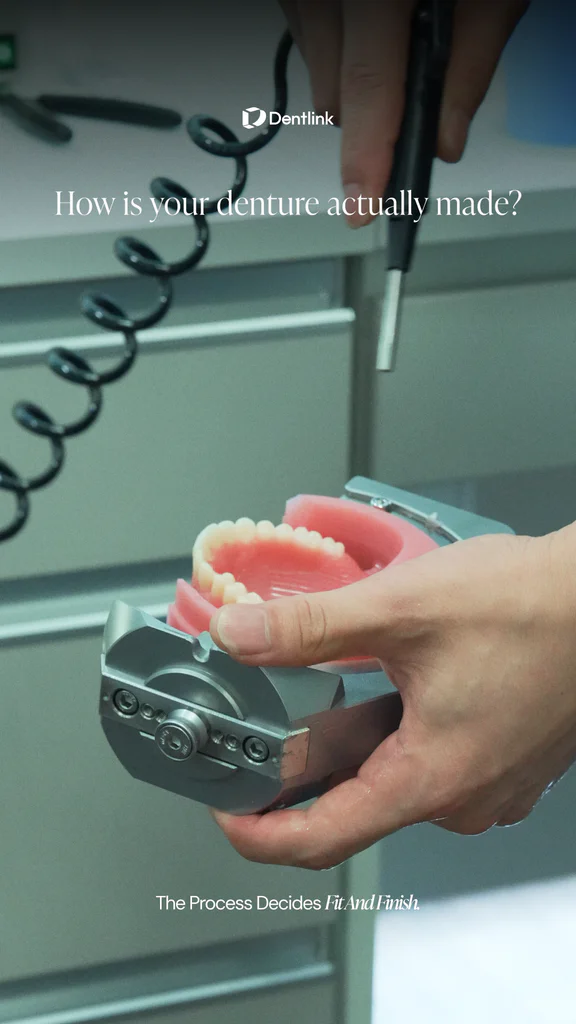
3. Who Checks the Denture After Manufacturing?
Manufacturing is not the final step.
Once milling is complete, there are still details that require attention before a denture reaches the practice.
Finishing, polishing, surface quality, occlusal considerations, and final inspection all contribute to the completed prosthesis.
That makes another question important:
Who is responsible for the final check?
At Dentlink, experienced dental technicians remain involved after the digital manufacturing stage. The final work is inspected and refined by hand rather than considered complete as soon as the milling process ends.
This combination of digital manufacturing and technician refinement is also explored in Digital Denture Quality: Why Every Detail Matters.
For dentists evaluating a digital denture lab, it is worth understanding where technology ends—and where technician judgment begins.
4. Who Do You Talk to When the Case Needs Clarification?
A denture case can involve questions that are difficult to capture in a prescription alone.
Patient-specific considerations, design preferences, previous feedback, or questions about the records may need discussion during the case.
So ask:
Who will I actually communicate with?
Knowing whether you are speaking with a customer service team, a case coordinator, or the technician responsible for the work can make a meaningful difference in how case information moves through the laboratory.
At Dentlink, dentists work with a 1:1 designated technician who stays connected to the case.
That means communication and production do not have to exist as completely separate parts of the workflow.
You can learn more about this approach in Why a 1:1 Dental Technician Changes the Way You Work With a Dental Lab.
For a dentist, the benefit is simple: when a question comes up, it helps to know who understands the case.
5. What Happens Between Manufacturing and Final Delivery?
The last question connects everything else.
A reliable denture lab should be able to tell you what happens before the case leaves the bench.
How is the final denture reviewed?
What details are checked?
How does the laboratory maintain consistency from case to case?
A digital workflow can make manufacturing more repeatable, but the final result still depends on how carefully each stage is managed.
For an example of how those stages come together in an actual patient case, see our Digital Denture Case Review: A 6-Month Journey from Wax Try-In to Final Denture.
The case followed the patient from the initial wax try-in through the immediate denture stage and ultimately to the completed final denture—showing that a successful result is rarely defined by one manufacturing step alone.
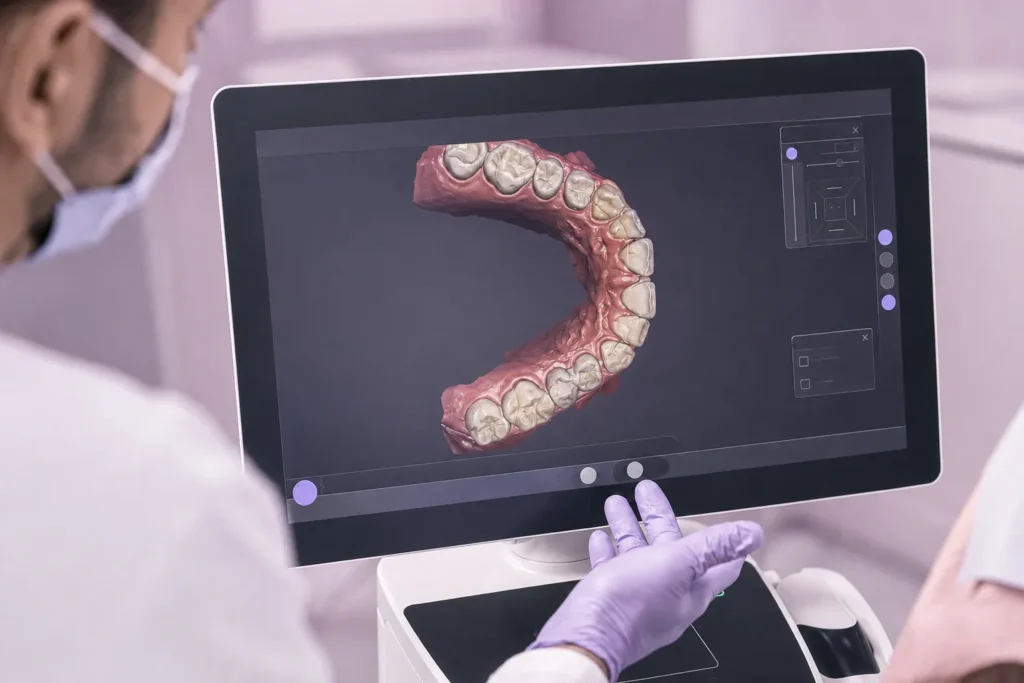
A Better Question Than “Is It Digital?”
Digital dentistry has changed how dentures can be designed and manufactured.
But when choosing a denture lab, asking whether it uses digital technology is only the beginning.
A more useful set of questions is:
How can I send the case?
How will it be made?
Who finishes it?
Who can I speak with?
And what happens before it reaches my chair?
Those answers tell you much more about the workflow behind the final denture.
At Dentlink, we combine flexible case input, digital manufacturing, experienced technician finishing, and direct communication throughout the process.
From input to final finish, Dentlink has it covered.
Your next denture case.
Made by Masters.
Ready to send your next denture case? Submit it through the Dentlink portal.
Frequently Asked Questions About Choosing a Denture Lab
What should I ask a denture lab before sending a case?
Ask how the lab accepts clinical records, how the denture is manufactured, who performs the final finishing and quality checks, and who you can contact if questions arise during the case.
Can a digital denture begin with a conventional impression?
Yes. A digital denture workflow does not always have to begin with an intraoral scan. Depending on the laboratory and clinical workflow, conventional impressions can be used as the starting records before the case moves into digital design and manufacturing.
What makes a digital denture lab different?
A digital denture lab uses digital design and manufacturing technologies as part of the production process. However, the technology itself is only one part of the workflow. Case review, communication, technician finishing, and final quality control also matter when evaluating a laboratory.
Your first crown is on us.
Free implant crown, free scanbody kit, and $200 off your next case. Just send your first scan.
Create your Dentlink account, register your clinic, add Dentlink as your lab in your scanner software, then send your case.