Should I Rescan This? What Your Dental Lab Looks for in an Intraoral Scan
“Should I rescan this?”
It is a familiar question in a digital restorative workflow.
You finish an intraoral scan, look back at the preparation, and something gives you pause. Maybe the margin is not as clear as you would like. Maybe one area of the scan looks questionable. Or maybe you simply are not sure whether the data is good enough for the lab to move forward.
Intraoral scan quality matters—but deciding what happens next does not always have to be a decision you make alone.
An experienced dental lab technician can review the scan, identify what needs a closer look, and communicate with you before the case moves further into design and fabrication.
That interaction can be just as important as the scanner itself.
What Does a Dental Lab Look for in Intraoral Scan Quality?
When a digital case reaches the lab, the scan is not simply opened and sent straight into production.
The technician needs to understand whether the available data provides enough information to design the restoration appropriately.
Depending on the case, that review may include areas such as:
- margin visibility
- preparation detail
- surrounding anatomy
- proximal areas
- opposing arch data
- bite relationship
- case-specific prescription and design requirements
These are also common areas highlighted in laboratory guidance for evaluating digital impression data before CAD design.
But this is where an important distinction matters:
Not every scan that looks less than perfect automatically requires a full rescan. And not every scan can—or should—be “fixed” by the lab.
The important question is whether the technician has enough reliable information to proceed without guessing.
So, Should You Rescan?
Sometimes, yes.
If essential clinical information is missing or unclear, getting better data before fabrication is often the right decision.
But there are also cases where the question is less obvious.
Perhaps one area deserves a closer look. Perhaps the technician needs clarification about where you intended the margin to be. Or perhaps the scan data can be evaluated together before deciding whether another scan is necessary.
That is why dental lab scan review should be a conversation, not simply a pass-or-fail judgment.
A strong lab relationship gives you a way to ask:
Is this enough to move forward?
And it gives the technician a way to answer before assumptions become part of the design.
This is also why direct communication with your dental lab technician matters when a case needs clarification.
A Real Case: When the Dentist Was Unsure About the Scan
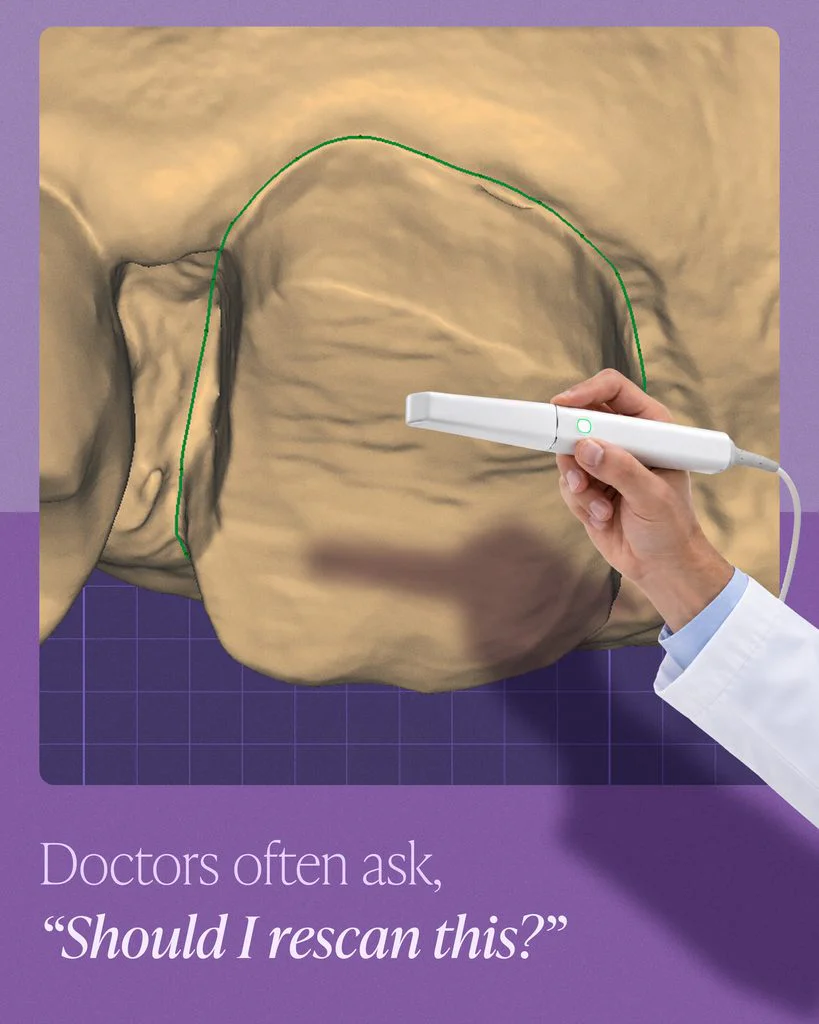
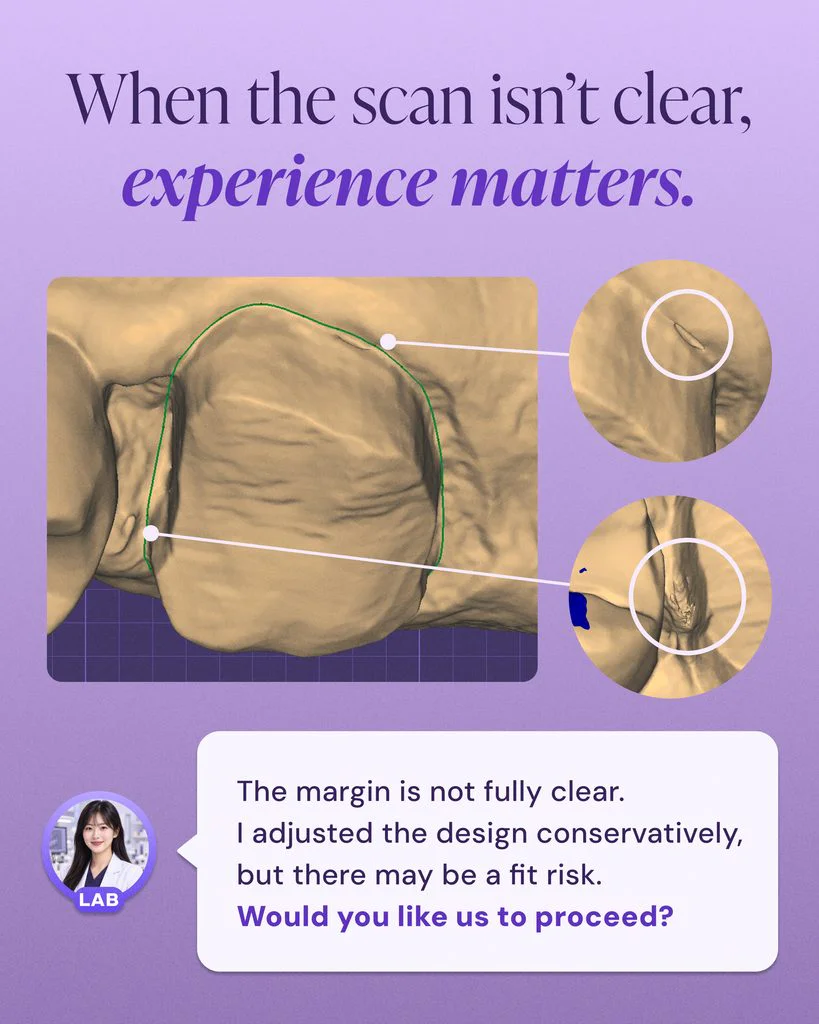
A recent Dentlink case shows what this can look like in practice.
The dentist was concerned about the scan and was not entirely confident about how the case would turn out.
During the design process, the Dentlink technician reviewed the scan data, looked closely at the case, and communicated about how to proceed.
The restoration was ultimately delivered successfully.
And the dentist’s feedback after delivery was simple:
“The crown fit really well, and the patient was very happy.”
The takeaway is not that a dental lab can make inaccurate scan data disappear.
It is something more practical:
When you are unsure about a scan, having an experienced technician actually review the case can help you make a better-informed next decision.
That may mean proceeding.
It may mean clarifying something.
And when necessary, it may mean rescanning before fabrication begins.
The Best Technician Does Not Guess
This may be one of the most important parts of evaluating a dental lab.
When information is unclear, you do not want the technician quietly making assumptions just to keep the case moving.
You want someone who knows when to look closer—and when to ask.
At Dentlink, each dentist works with a 1:1 designated lab technician, so case-specific questions can stay connected to the person actually working on the restoration.
Learn more about why a 1:1 dental technician changes the way you work with a dental lab.
Your Intraoral Scan Is the Start of the Conversation
Digital dentistry makes transferring clinical data faster.
But a digital workflow is still a collaboration between the dentist who captures the clinical information and the technician who turns that information into a restoration.
That means intraoral scan quality is important—but so is what happens after you hit send.
Who reviews the scan?
What happens when something looks questionable?
Can the technician ask you directly?
And do you know who is actually making the case?
Those questions matter because the goal is not simply to accept as many scans as possible.
The goal is to give each case the information and judgment it needs before it reaches the patient.
What Happens After You Send Your Scan to Dentlink?
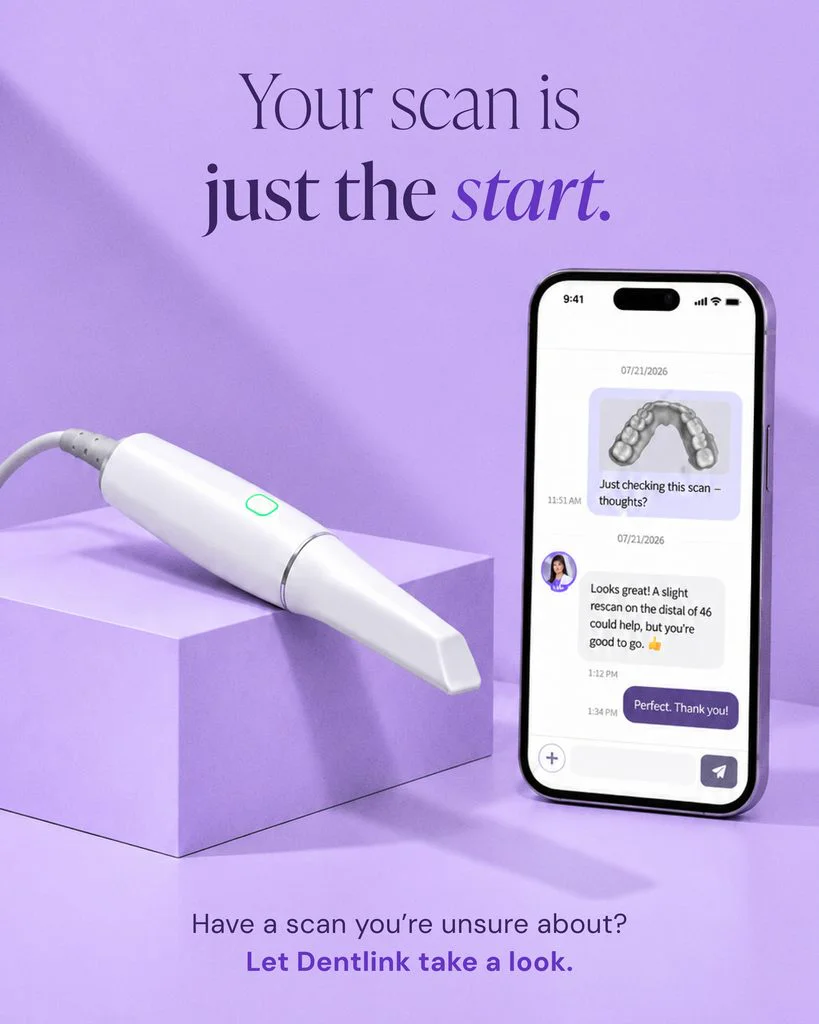
At Dentlink, your designated technician reviews the case before it moves through CAD design and fabrication. If clarification is needed, the dentist and technician can communicate directly during the process.
For a closer look at the full workflow, see: From scan review to final delivery: see how a Dentlink case moves through the lab.
Dentlink currently describes scan review and CAD design as the first stage of its digital lab workflow, with direct technician communication when something needs attention.
Not Sure About Your Next Scan?
The next time you finish scanning and wonder,
“Should I rescan this?”
you do not necessarily have to make that call in isolation.
Send the case to a lab where an experienced technician can look at the data, communicate with you, and tell you when more information is actually needed.
Your scan is the starting point.
The experience behind it matters from there.
Made by Masters.
Have a case you’re unsure about?
Send your scan to Dentlink and let your designated technician take a closer look.
Your first crown is on us.
Free implant crown, free scanbody kit, and $200 off your next case. Just send your first scan.
Create your Dentlink account, register your clinic, add Dentlink as your lab in your scanner software, then send your case.