What Does Good Dental Lab Communication for DSOs Look Like? A 4-Location Practice Leader Shares His Experience
For a single dentist, calling the lab with a question may be simple.
But dental lab communication for DSOs becomes a different challenge when multiple doctors are sending cases, communicating different clinical preferences, and expecting answers from the same laboratory partner.
The question for a growing dental group is not only:
“Can this lab handle our cases?”
It is also:
“Can each of our doctors still communicate clearly with the people actually working on those cases?”
Dr. Cedric Lewis has seen that challenge from a multi-location perspective.
He is the founder and CEO of Kokua Smiles, a four-location dental practice across Oahu, and a founding partner and clinical director of Rising Tide Dental Partners, a dental partnership organization with 33 locations across 11 states.
His experience with Dentlink discussed here comes from working with Dentlink at Kokua Smiles for the past two years.
And when asked what has made that relationship different, Dr. Lewis keeps coming back to one thing:
communication.
First, He Saw the Lab Behind the Cases
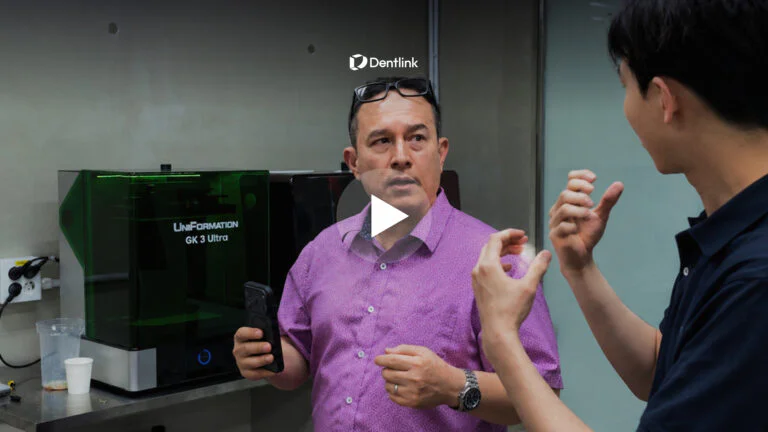
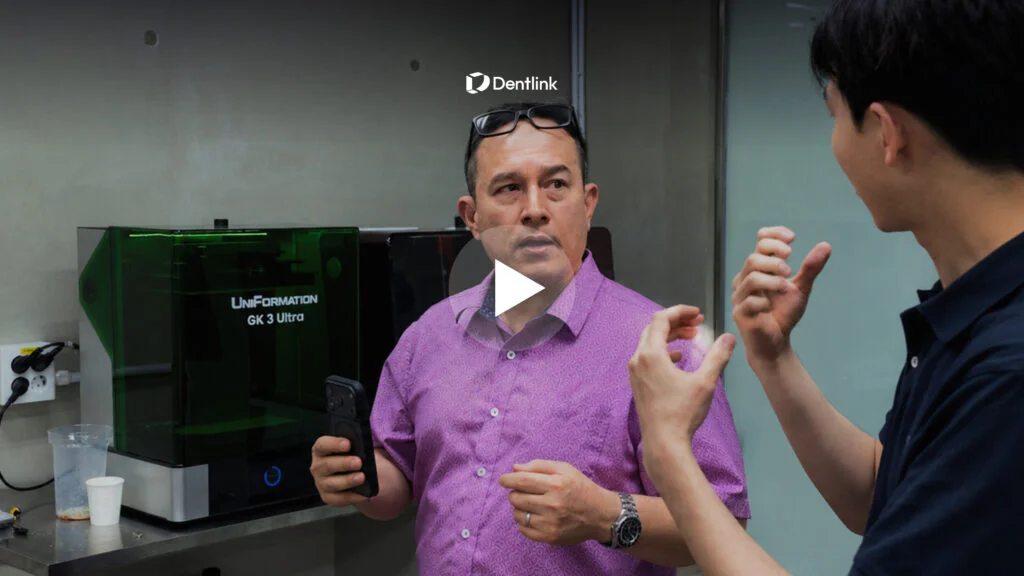
Recently, Dr. Lewis visited the Dentlink lab for the first time after working with the team for two years.
During the visit, he saw the technology, watched a technician work on a real case, and met the people behind the restorations his team had already been receiving.
In the first story in this series, we looked at what a DSO leader should actually look for during a dental lab visit.
But seeing the lab is only one side of the relationship.
The more practical question is:
What is it actually like to work with that lab when you have multiple doctors sending cases every day?
For Dr. Lewis, the answer begins with how easily his doctors can communicate with Dentlink technicians.
The dental lab Communication for DSOs Problem Isn’t Just Volume. It’s Layers.
As a dental organization grows, sending more cases is only part of the challenge.
Every additional doctor brings their own clinical preferences, questions, and expectations.
When a case needs clarification, that question may move from the dentist to a team member, then to a lab contact, and eventually to the technician actually working on the restoration.
The more handoffs involved, the easier it becomes for a simple clinical question to turn into an operational issue.
Dr. Lewis says his experience with Dentlink has been different.
“If there’s any problems that the lab tech needs to communicate to my doctors, they’re immediately having communications through the lab portal.”
That distinction is important.
His doctors are not simply sending cases into a centralized lab system and waiting for someone to relay a response.
They can stay connected with the technicians handling their cases.
Doctor-to-Technician Communication Without the Extra Handoffs
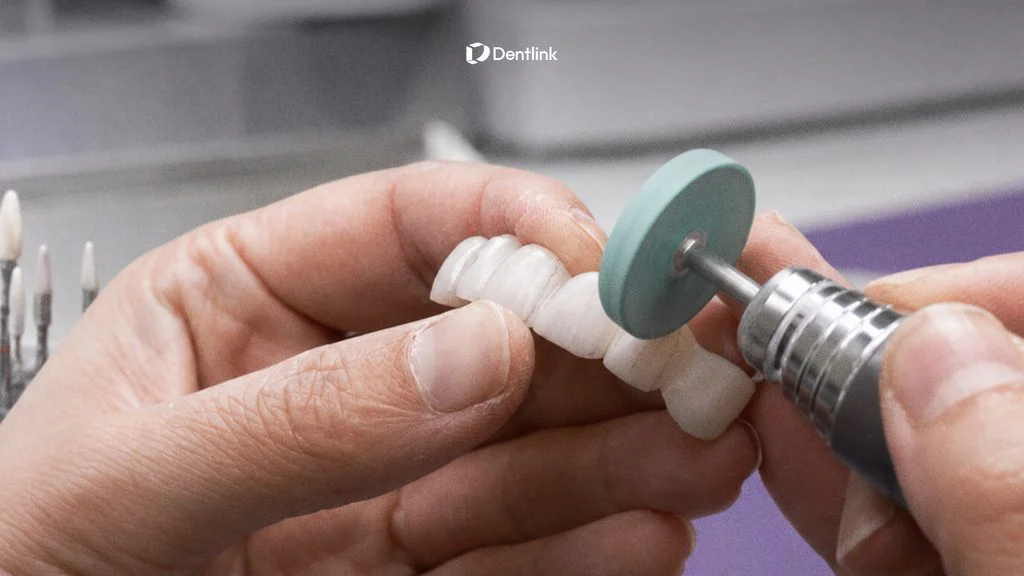
For Dr. Lewis, one of the strongest parts of the Dentlink relationship has been the interaction between his doctors and the laboratory team.
He describes that interaction as:
“Unparalleled.”
And the value is not simply that Dentlink has a digital portal.
Technology alone does not solve dental lab communication for DSOs.
What matters is who the technology connects.
With Dentlink, doctors can communicate directly with the technician working on the case when clarification is needed.
That can mean fewer unnecessary communication layers between the clinical question and the person who can actually address it.
For a dental group, this creates an important balance:
The organization gets a shared lab workflow, while individual doctors can still maintain a direct clinical connection with their technicians.
Dentlink builds that relationship around a designated technician model. You can read more about why working with a 1:1 dental technician can change the lab experience from case to case.
What Does “Efficient and Seamless” Mean Across Multiple Doctors?
When Dr. Lewis describes the Dentlink workflow, he uses two words:
“Very efficient and very seamless.”
For a four-location practice, those words mean more than convenience.
A multi-location lab relationship has to work at two levels at the same time.
At the organization level, the workflow needs to remain manageable as more doctors and cases are involved.
At the clinical level, each dentist still needs to feel that the laboratory understands the individual case.
That is where direct doctor-to-technician communication can make a meaningful difference.
Instead of making the lab relationship more distant as the group becomes larger, the workflow can keep case-level communication close to the clinician.
For DSO clinical leaders, that raises a useful question:
As your group grows, does your lab become easier or harder for individual doctors to work with?
Three Questions DSO Clinical Leaders Should Ask About Lab Communication
Before expanding a lab relationship across more doctors or locations, look closely at what happens when an actual case needs attention.
Can the doctor reach the person who understands the technical side of the case?
If every clinical question has to move through several intermediaries first, adding more locations may add even more communication layers.
What happens when the technician needs clarification?
The strongest workflow is not one where questions never happen. Complex restorative cases will sometimes require more information.
The important question is whether the doctor and technician have an efficient way to resolve those questions before production continues.
Does the relationship remain personal as the organization grows?
Scale should not necessarily mean anonymity.
For clinical leaders, having a standardized laboratory relationship can be valuable—but individual dentists still need confidence that their preferences and case requirements are understood.
That is one of the reasons Dr. Lewis’s experience is relevant beyond a single restoration.
He is describing what the lab relationship feels like inside a multi-doctor practice.
Why Dental Lab Communication for DSOs Should Be Evaluated Differently
A DSO can negotiate pricing, centralize vendors, and consolidate case volume.
But laboratory consolidation only creates value if the clinical experience still works for the doctors using that lab every day.
That is why dental lab communication for DSOs should not be evaluated only at the corporate or procurement level.
Clinical leaders should also ask:
What happens when Dr. A needs to clarify an implant case?
What if Dr. B has different occlusal or esthetic preferences?
Can both doctors communicate effectively without learning completely different workflows?
And can the laboratory keep those conversations connected to the individual cases?
These details may seem small at one location.
Across multiple doctors and hundreds or thousands of cases, they become part of the operating model.
For organizations evaluating a laboratory relationship more broadly, our guide to 7 questions DSO leaders should ask before choosing a dental lab partner covers scalability, predictability, visibility, support, and infrastructure in more detail.
What Changed for Kokua Smiles?
For Dr. Lewis, the takeaway is not a feature list.
It is the experience his doctors have had working with the lab.
Communication with technicians is direct.
Questions can be handled through the case workflow.
And despite operating a four-location practice, he describes the relationship as efficient and seamless.
His overall assessment is even simpler:
“Dentlink has been a huge game changer for our practice.”
That quote matters because it comes after two years of actually working together.
For a DSO or multi-location practice evaluating a new lab, that kind of experience is worth looking at closely.
The real test of a lab relationship is not whether the workflow sounds scalable in a presentation.
It is whether doctors still find it easy to work with when the cases start moving.
More Doctors Shouldn’t Mean More Distance From Your Lab
Growth changes the way a dental organization works.
But it should not require doctors to become more disconnected from the technicians making their restorations.
The best dental lab communication for DSOs should support both sides of the organization:
a workflow that can serve multiple practices and a technician relationship that still works at the individual case level.
That is the experience Dr. Lewis describes at Kokua Smiles.
For DSO clinical leaders considering a new laboratory partner, the question may be less about whether a lab can simply accept more volume.
A better question may be:
“When one of our doctors needs the lab, how many people stand between them and the person working on the case?”
That answer can tell you a lot about what the relationship will look like as your organization grows.
Continue the DSO Series
Part 1 — Inside the Lab
Before this interview, Dr. Lewis visited Dentlink to see the people, technology, and workflow behind the cases himself.
→ See what DSO leaders should look for during a dental lab visit.
Evaluating a lab partner for your organization?
Communication is one part of the decision. Scalability, visibility, predictable support, quality, and operational infrastructure matter as well.
→ Read 7 questions DSO leaders should ask when evaluating a dental lab partner.
Comparing lab costs across your organization?
The lowest unit price does not necessarily represent the lowest operational cost.
→ See how DSO leaders should evaluate dental lab pricing and total cost.
Ready to See How Dentlink Could Work Across Your Dental Group?
If your organization is looking for a lab relationship that gives individual doctors direct access to the technicians behind their cases, talk to the Dentlink team.
Talk to Dentlink about supporting your doctors and locations.
Dentlink.
Made by Masters.
FAQ
Why is dental lab communication for DSOs important?
Dental lab communication becomes more complex as an organization adds doctors, locations, cases, and individual clinical preferences. A clear workflow can help clinicians resolve case-specific questions without adding unnecessary communication layers.
How does Dentlink communicate with doctors in multi-location practices?
Dentlink allows dentists to communicate with the technicians handling their cases through its digital workflow. This keeps case-specific communication closer to the clinician and technician.
Can individual doctors communicate directly with Dentlink technicians?
Yes. Dentlink uses a designated technician model that allows doctors to communicate directly with the technicians responsible for their cases when questions or clarification are needed.
What should DSO clinical leaders ask when evaluating dental lab communication?
Clinical leaders should look at who doctors contact when questions arise, how quickly technical clarification reaches the right person, whether individual doctor preferences can be maintained, and whether the same workflow can support additional clinicians and locations.
What should a DSO consider besides dental lab communication for DSOs?
DSOs should also evaluate restoration quality, predictability, turnaround, case visibility, technical support, pricing, remake policies, infrastructure, and the laboratory’s ability to support additional locations and case volume.
Your first crown is on us.
Free implant crown, free scanbody kit, and $200 off your next case. Just send your first scan.
Create your Dentlink account, register your clinic, add Dentlink as your lab in your scanner software, then send your case.