How Screwmentable Restorations (SCRP) Improve Challenging Implant Cases: A Proven Clinical Workflow
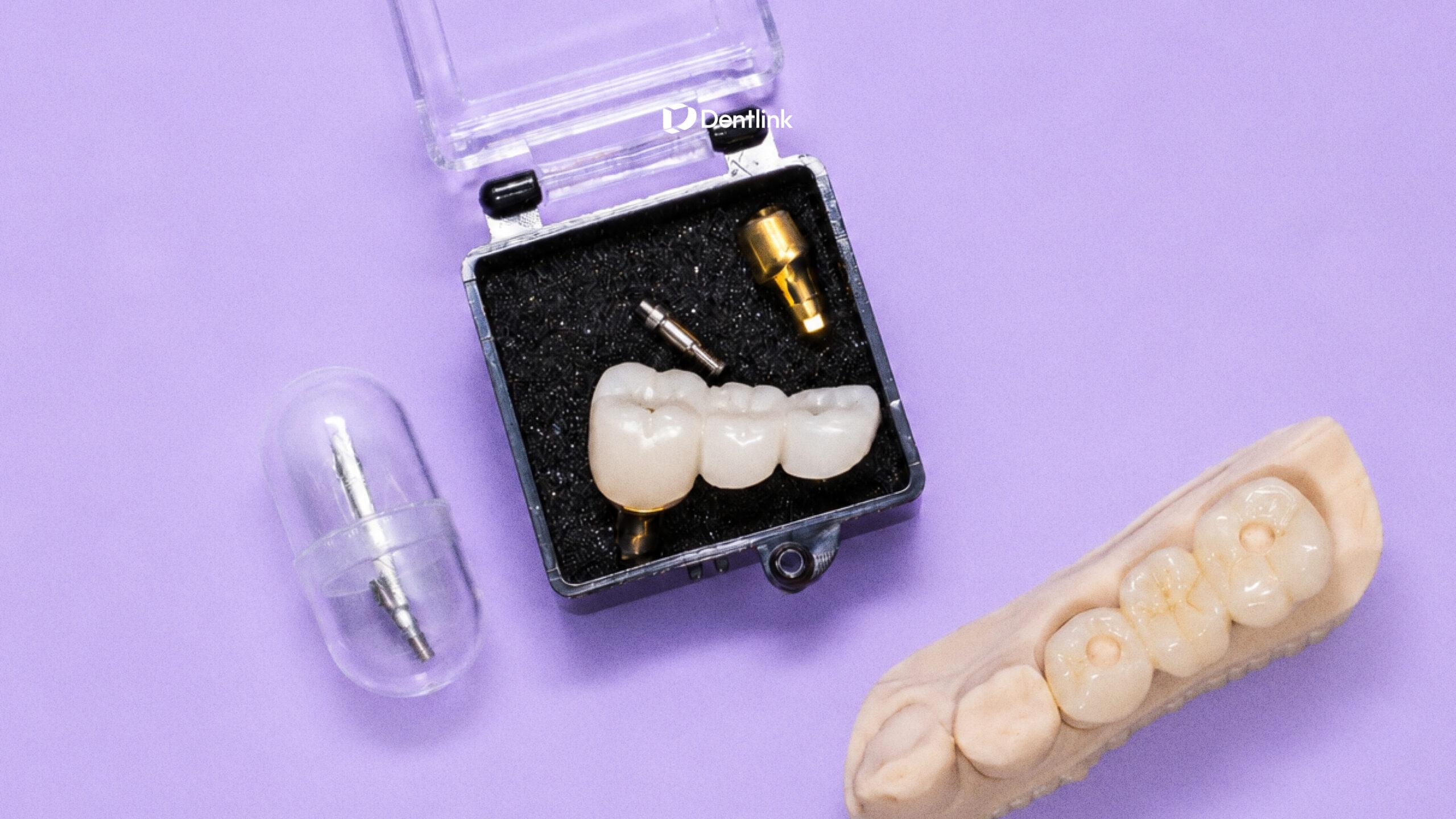
A screwmentable restoration (SCRP) is often chosen when clinicians need to balance esthetics, retrievability, and long-term maintenance in implant dentistry.
Achieving that balance, however, isn’t always straightforward.
When implant angulation isn’t ideal, clinicians are often forced to compromise. A screw-retained restoration preserves retrievability but may result in an unfavorable screw access position. A cement-retained restoration can improve esthetics, yet excess cement remains a well-recognized clinical concern.
A screwmentable restoration (SCRP) offers a practical solution by combining the strengths of both approaches.
Instead of choosing between esthetics and retrievability, clinicians can often achieve both with a carefully planned SCRP workflow.
A Real Clinical Case
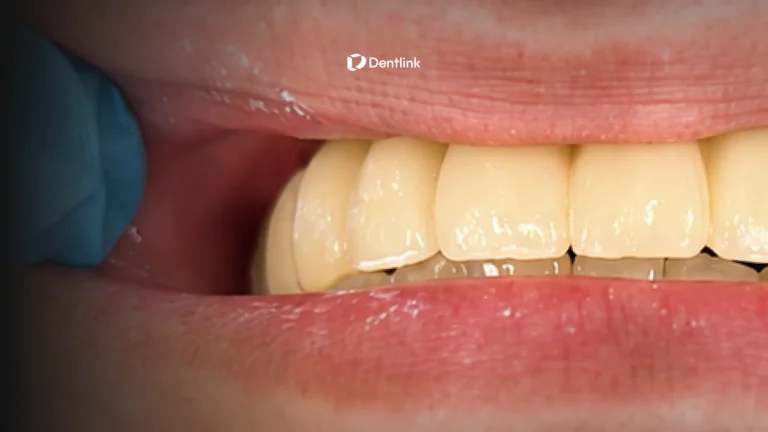
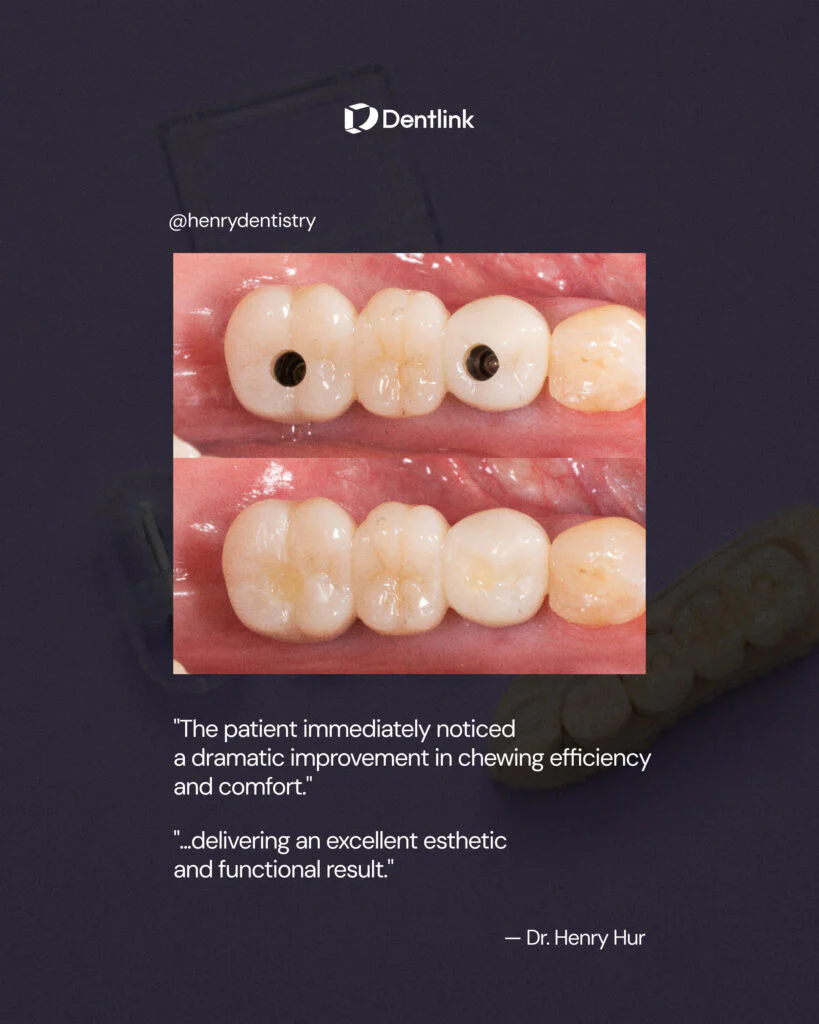
Recently, Dr. Henry Hur restored an implant case using an SCRP workflow fabricated by Dentlink.
After delivery, he shared:
“The patient immediately noticed a dramatic improvement in chewing efficiency and comfort.”
He also described the outcome as:
“…delivering an excellent esthetic and functional result.”
While every implant case presents its own challenges, this case demonstrates an important principle: when restorative planning and laboratory execution work together, clinicians can often achieve predictable functional and esthetic outcomes.
The Clinical Challenge Behind Implant Restorations
Implant restorations rarely fail because of a single factor.
Instead, success often depends on managing several clinical variables at once.
Among the most common challenges are:
- Implant angulation affecting screw access positioning
- Achieving natural esthetics in the anterior region
- Preventing excess cement around the implant
- Allowing future retrieval for maintenance or repair
Traditional screw-retained and cement-retained restorations each address some of these concerns, but neither completely solves all of them. If you’re comparing different implant restoration options, read our guide to SCRP vs SRP vs CRP to understand when each approach may be appropriate.
That’s why many clinicians consider a screwmentable restoration when treatment goals include esthetics, retrievability, and long-term maintenance.
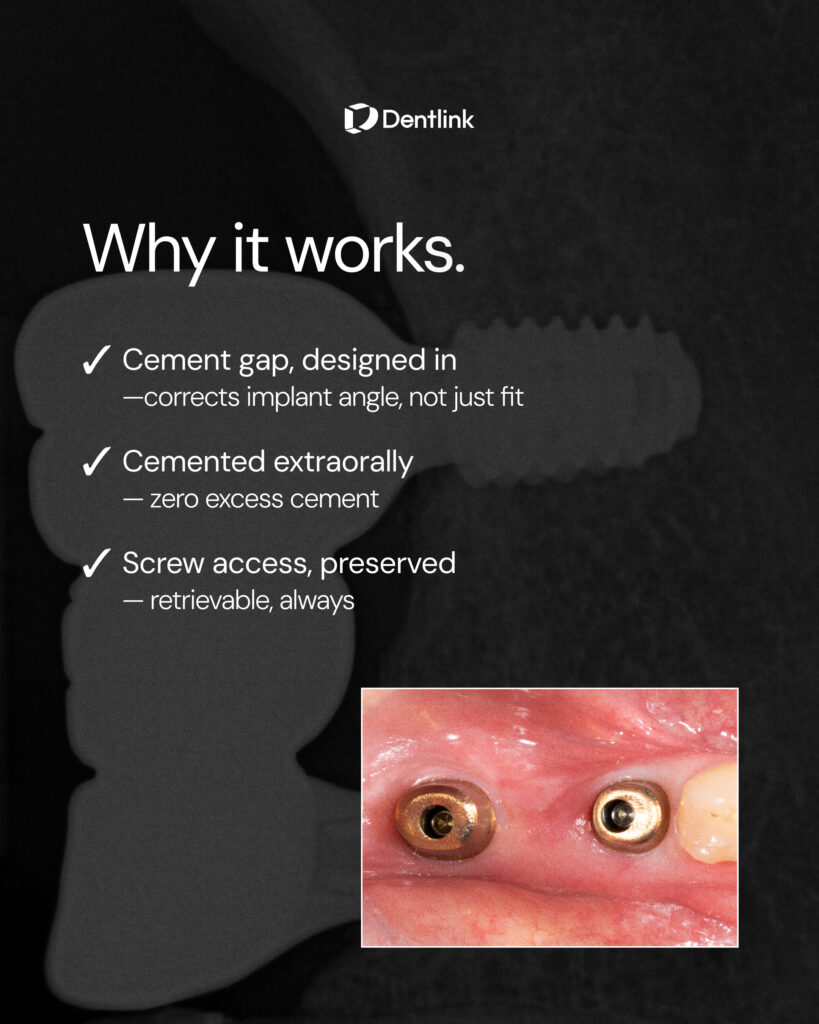
Why This SCRP Workflow Works
Rather than simply combining two restoration types, a properly designed screwmentable restoration addresses specific clinical challenges through careful planning.
Designed Cement Gap
A precisely engineered cement gap does more than improve seating.
It provides the flexibility needed to compensate for implant angulation while maintaining an accurate fit between the restoration and abutment.
This planning stage plays an important role in achieving predictable restorative outcomes.
Extraoral Cementation
One of the biggest advantages of an SCRP workflow is that cementation occurs outside the patient’s mouth.
Because excess cement can be thoroughly removed before delivery, clinicians significantly reduce one of the primary concerns associated with conventional cement-retained restorations.
The result is a cleaner and more controlled delivery process.
Preserved Screw Access
Although the crown is cemented to the abutment, the restoration remains screw-retained once delivered.
This preserves retrievability, allowing clinicians to remove the restoration for maintenance, repair, or future treatment without sacrificing the integrity of the crown.
The Laboratory’s Role in Clinical Success
An SCRP restoration depends on far more than the clinical impression.
Laboratory planning directly influences how predictably the restoration performs. Choosing the right dental lab for implant crowns can significantly impact fit, esthetics, and long-term success.
At Dentlink, every SCRP case is designed with attention to:
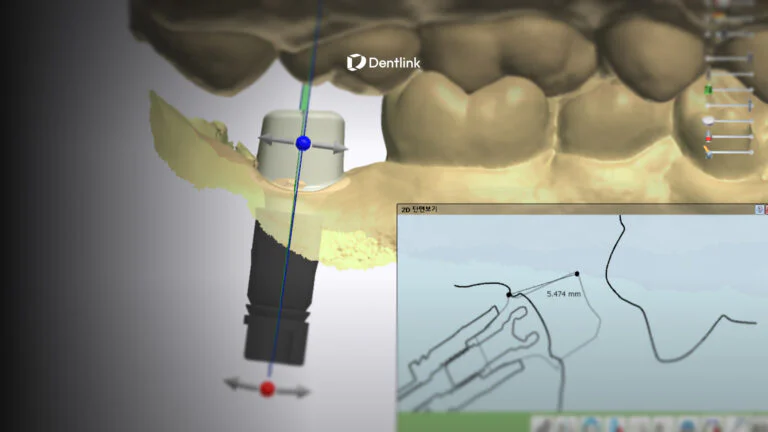
- Accurate digital implant planning
- Passive implant fit
- Precise cement gap design
- Proper screw channel positioning
- Comprehensive quality control before delivery
These details may not always be visible once the restoration is seated, but they can significantly affect delivery, maintenance, and long-term performance.
When Should You Consider an SCRP Restoration?
While no single restoration type is appropriate for every implant case, clinicians often consider an SCRP workflow when they want to achieve multiple treatment goals simultaneously.
An SCRP restoration may be a suitable option when:
- Implant angulation makes screw access challenging
- Esthetics are a high priority
- Excess cement is a clinical concern
- Future retrievability is important
- Long-term maintenance is part of the treatment plan
Ultimately, restoration selection should always be based on each patient’s clinical condition and restorative objectives.
What This Means for Your Next Implant Case
A screwmentable restoration (SCRP) represents more than a hybrid between screw-retained and cement-retained restorations.
When thoughtfully planned and accurately fabricated, it provides clinicians with a workflow that supports esthetics, minimizes cement-related concerns, and preserves long-term retrievability.
As Dr. Henry Hur’s case illustrates, the right restorative approach—combined with precise laboratory execution—can contribute to excellent functional and esthetic outcomes.
If you’re planning a challenging implant restoration, our team is happy to review your case and discuss whether an SCRP workflow may be the right solution.
Send your next case to Dentlink and discover how thoughtful laboratory planning can support more predictable implant restorations.
Your first crown is on us.
Free implant crown, free scanbody kit, and $200 off your next case. Just send your first scan.
Create your Dentlink account, register your clinic, then order from the scanner you already use.